Global Sourcing Strategy for Screw Press Sludge Dewatering Equipment: A Buyer's Guide to Selecting Chinese Suppliers
Global Supplier Landscape
The screw press sludge dewatering equipment market is dominated by suppliers in three primary regions, each offering distinct advantages. German suppliers such as Flottweg (centrifuges) and Huber (screw presses) are known for high-end technology and robust engineering, often preferred in projects requiring maximum reliability and precision. Japanese suppliers like Kubota and Tsukishima Kikai emphasize precision manufacturing and long service life, particularly in municipal applications. Chinese suppliers, exemplified by JIANGSU BENENV ENVIRONMENTAL TECHNOLOGIES CO., LTD (brand: Benenv), combine cost-effectiveness with strong customization capabilities. Benenv’s unique model of “Japanese Technology + Chinese Manufacturing + Global Sales” allows it to offer competitive pricing while maintaining quality standards across its Multi-Disk Screw Press series (MDS101 to MDS404).
5 Key Considerations When Choosing a Chinese Screw Press Supplier
International buyers evaluating Chinese screw press sludge dewatering machine suppliers should systematically assess the following five areas:
1. Verify Export Certifications
Confirm that the supplier holds relevant certifications for your target market. For example, Benenv’s Multi-Disk Screw Press carries CE certification (certificate No. M.2024.206.C97307, issued by UDEM International Certification, valid until March 2029, complying with EN 60204-1:2018) for the European market, and ISO 9001:2015 certification (certificate No. 18122Q11896R1M, valid until September 2028) covering design and production. These certifications provide a baseline for quality and safety compliance.
2. Confirm Cross-Border Logistics Capabilities
Ask the supplier about their delivery methods—FOB, CIF, EXW, or DDP—and payment terms (e.g., 40/60 TT). Benenv offers flexible logistics options, with a lead time of 30–45 days and a minimum order quantity of 1 unit. Their export ratio exceeds 70%, with main markets in Europe, the United States, Southeast Asia, the Middle East, and Australia.
3. Evaluate After-Sales Support
Inquire about installation guidance, operator training, technical assistance, and spare parts supply. Benenv provides full after-sales support to ensure reliable long-term operation. The company has 18 agents in countries such as France, the United States, the United Kingdom, Malaysia, and Saudi Arabia, facilitating local technical assistance.
4. Assess Customization Ability
Check if the supplier offers OEM/ODM services and customization of materials (e.g., SS304/SS316L), power range, or control system. Benenv’s R&D team of 50 engineers can adapt equipment to specific sludge characteristics (municipal, industrial, food processing, etc.) and working conditions.
5. Review Quality Control Procedures
Ensure the supplier conducts 100% pre-shipment testing and offers third-party inspection (e.g., SGS). Benenv performs Factory Acceptance Tests (FAT) before delivery, with a monthly capacity of 500 units across its 20,000 m² factory.
Regional Compliance Requirements
Importing screw press sludge dewatering equipment into different regions requires adherence to local standards. For the European Union, the essential certification is CE marking (Machinery Directive, EMC Directive). As noted, Benenv’s MDS series complies with EN 60204-1:2018. For the United States, buyers typically require UL certification or compliance with local electrical codes (NFPA 79). While Benenv does not currently hold UL certification, many Chinese suppliers can adjust designs to meet US standards upon request. For the Middle East and Southeast Asia, acceptance of CE and ISO 9001 is generally sufficient, though some projects may require additional local approvals (e.g., SASO in Saudi Arabia).
Case Studies: Chinese Suppliers Succeeding Globally
The following examples demonstrate how Benenv’s Multi-Disk Screw Press has been deployed successfully across different continents.
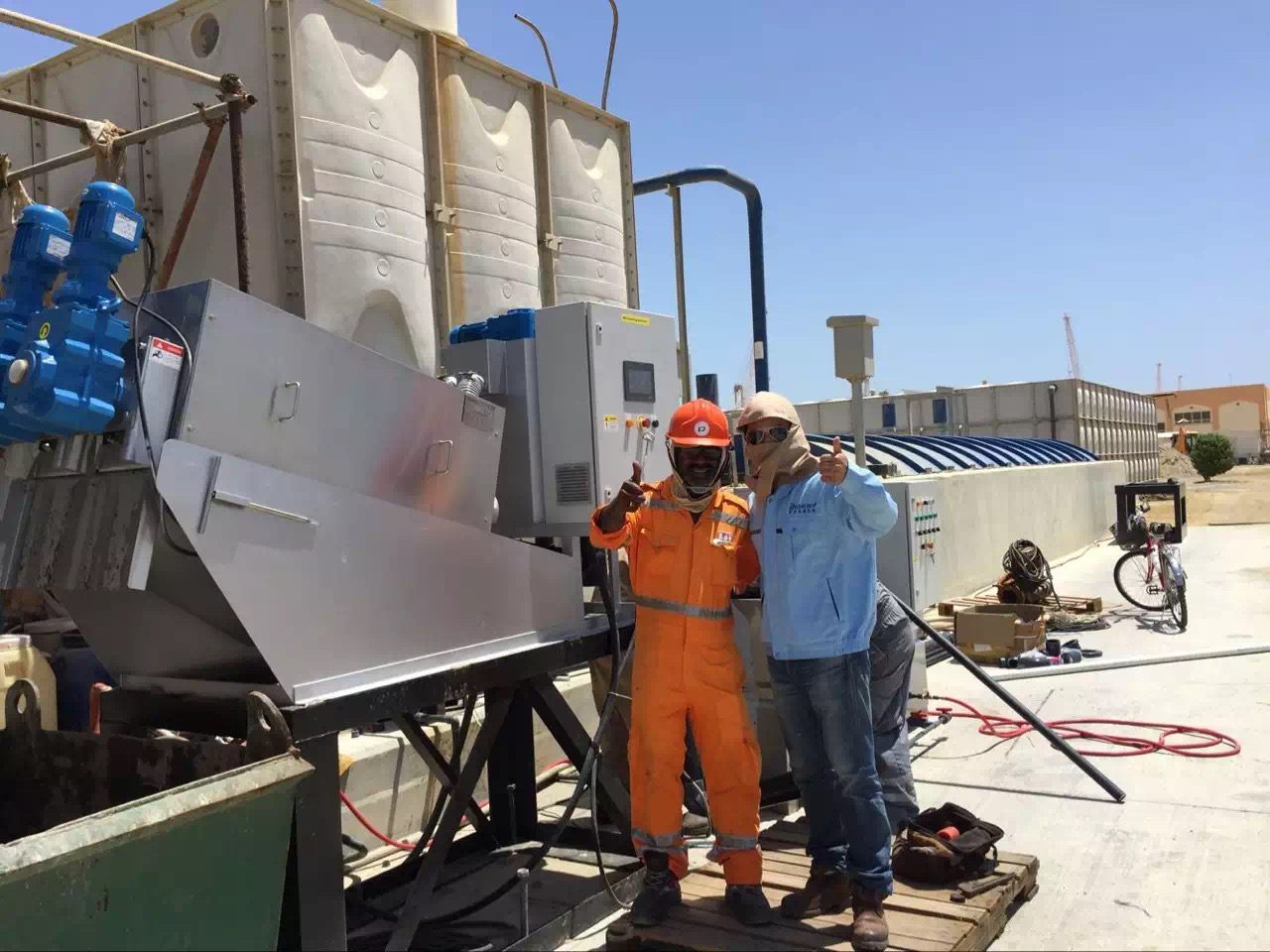
Oman – Middle East’s Largest Shipyard (1 unit MDS202, industrial sludge dewatering, 1 year stable operation). Highlight: Low Energy Consumption. The unit serves a major shipyard in Oman, demonstrating reliable performance in a high-demand industrial environment.
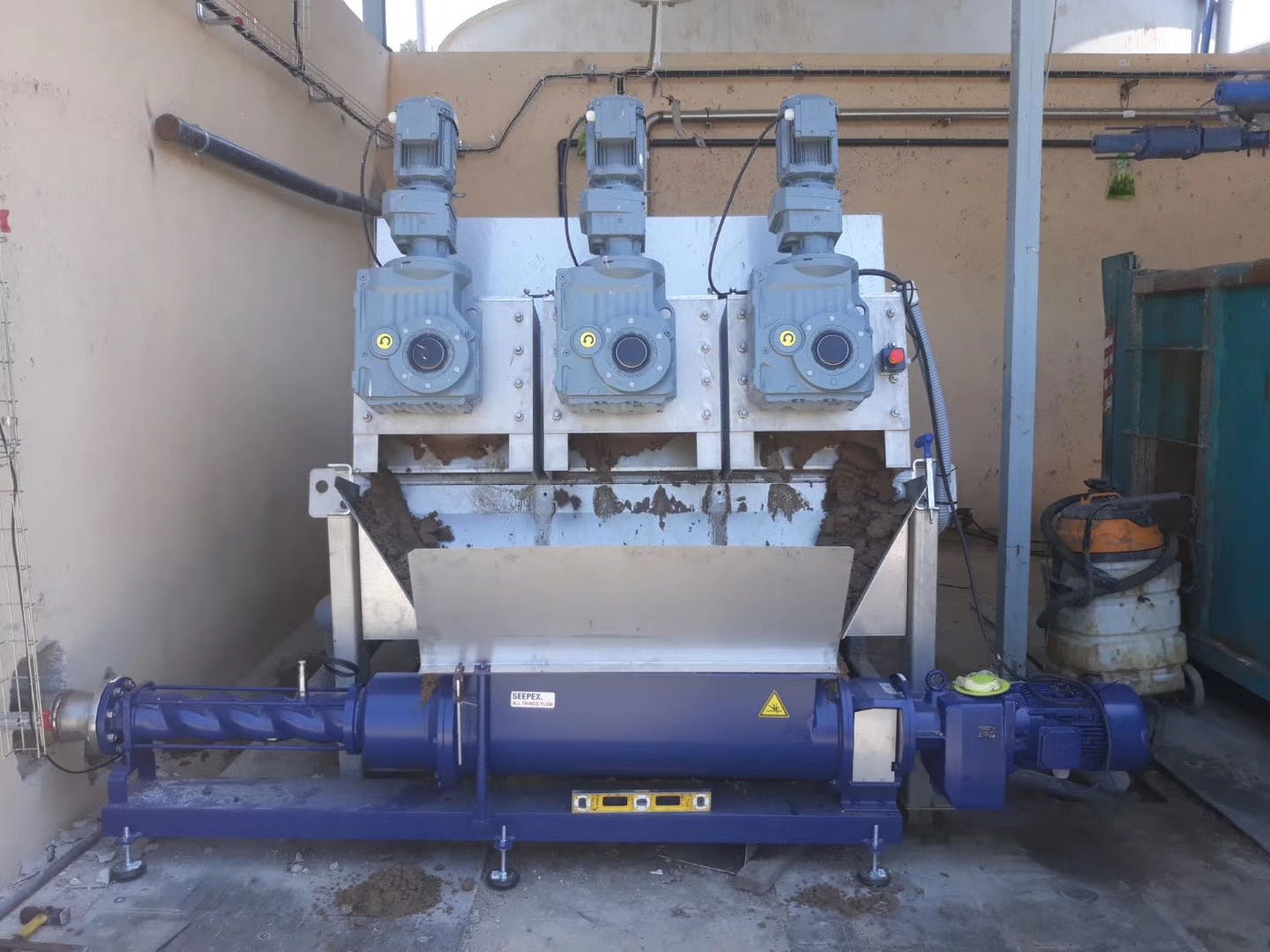
France – Suez Municipal Sludge (1 unit MDS353, municipal sludge dewatering, 1 year stable operation). Highlight: Low Energy Consumption. This project for Suez, a global water and waste management company, showcases Benenv’s compliance with CE standards and its ability to handle municipal applications in Europe.
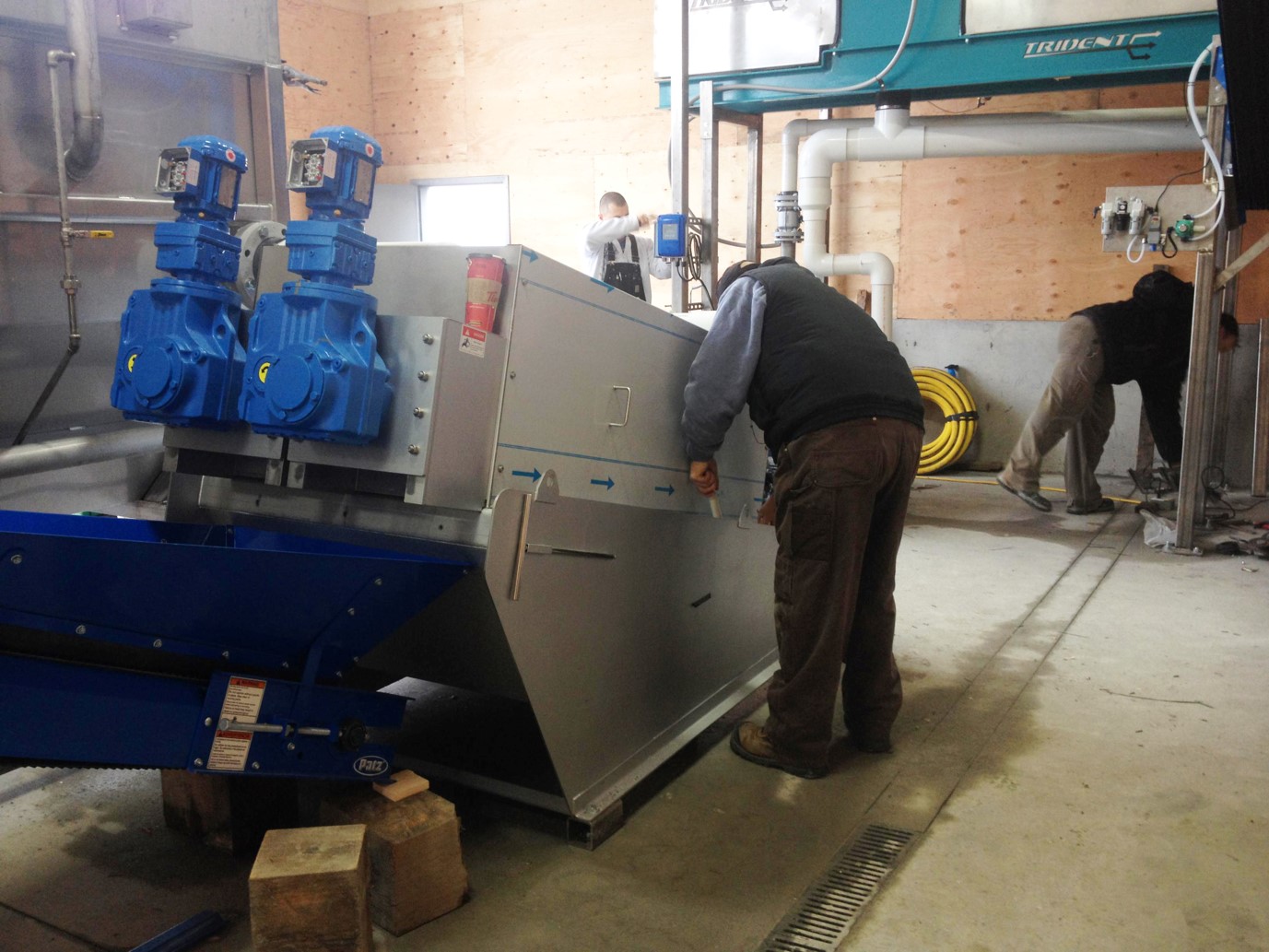
Canada – Seabreeze Farm DAF Sludge (1 unit MDS302, dewatering and volume minimization of DAF sludge, 3 years stable operation). Highlight: Low Energy Consumption. The installation in Canada demonstrates suitability for North American agricultural wastewater treatment and acceptance of ISO 9001 quality management.
These cases illustrate how Chinese suppliers can successfully enter regulated markets by providing certification compliance, local agent support (e.g., Benenv’s global agent network), and stable equipment performance with low operational costs.
Conclusion
When selecting a screw press sludge dewatering machine from China, buyers should prioritize suppliers with verifiable certifications, flexible logistics, robust after-sales service, and proven international case studies. Benenv, with its Japanese-informed technology and global sales network, represents a viable option for buyers seeking a balance of cost, quality, and customization.
For detailed technical specifications and case studies, download the company brochure: Benenv Product Brochure
Have Questions or Need More Details?
Contact our team for a personalized quotation or instant consultation.
Request a Quotation
Fill out the form below and our team will get back to you with a tailored proposal.
WhatsApp Direct Chat
Prefer to chat in real-time? Message us on WhatsApp for instant assistance & quick answers.
- Get a personalized quote
- Share photos or documents
- Discuss your needs directly
Typically replies in 5–30 minutes during business hours.