Screw Press Sludge Dewatering: Partnership, Purchasing Terms & Acceptance FAQ
Screw Press Sludge Dewatering: Partnership, Purchasing Terms & Acceptance FAQ
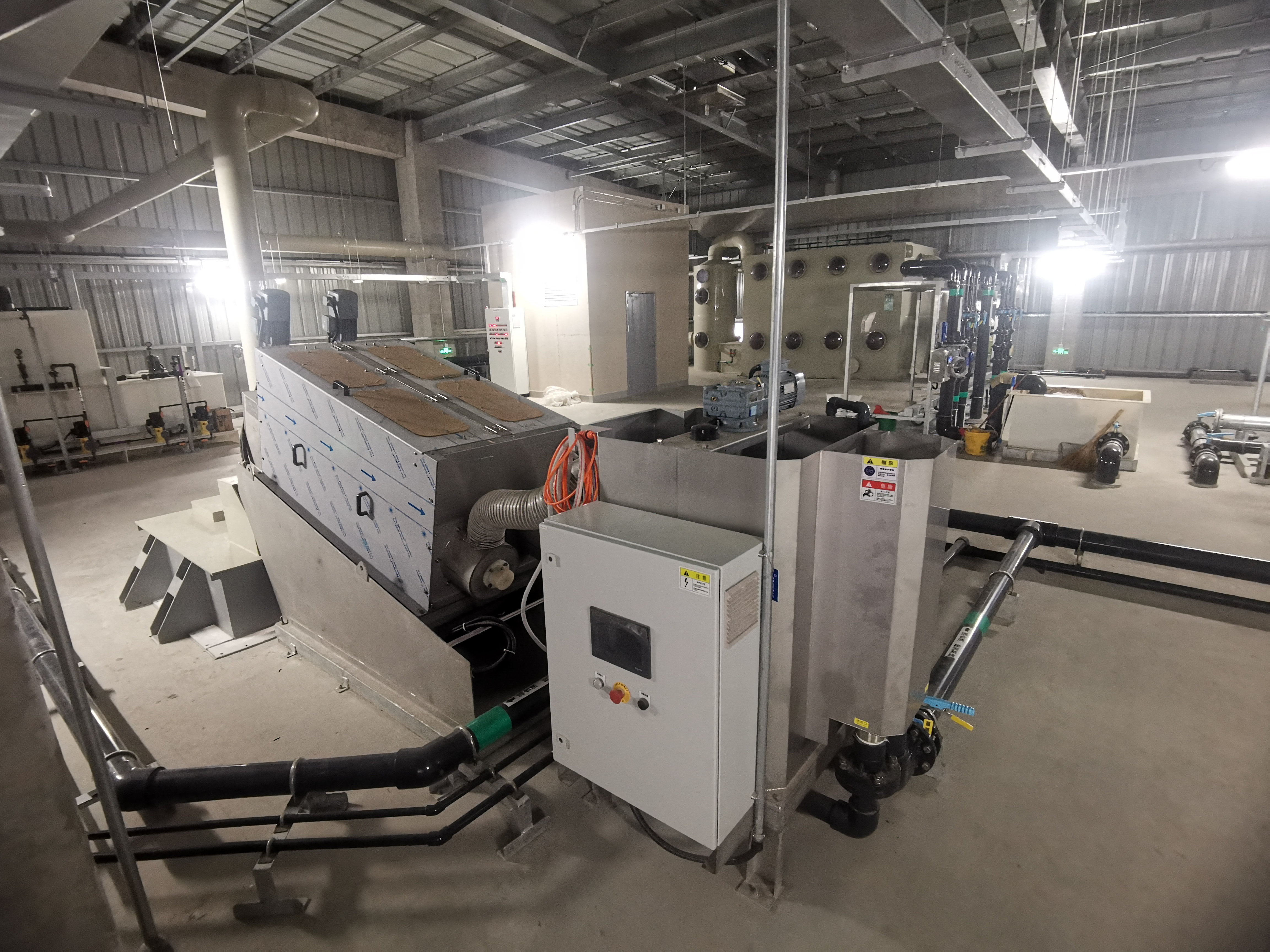
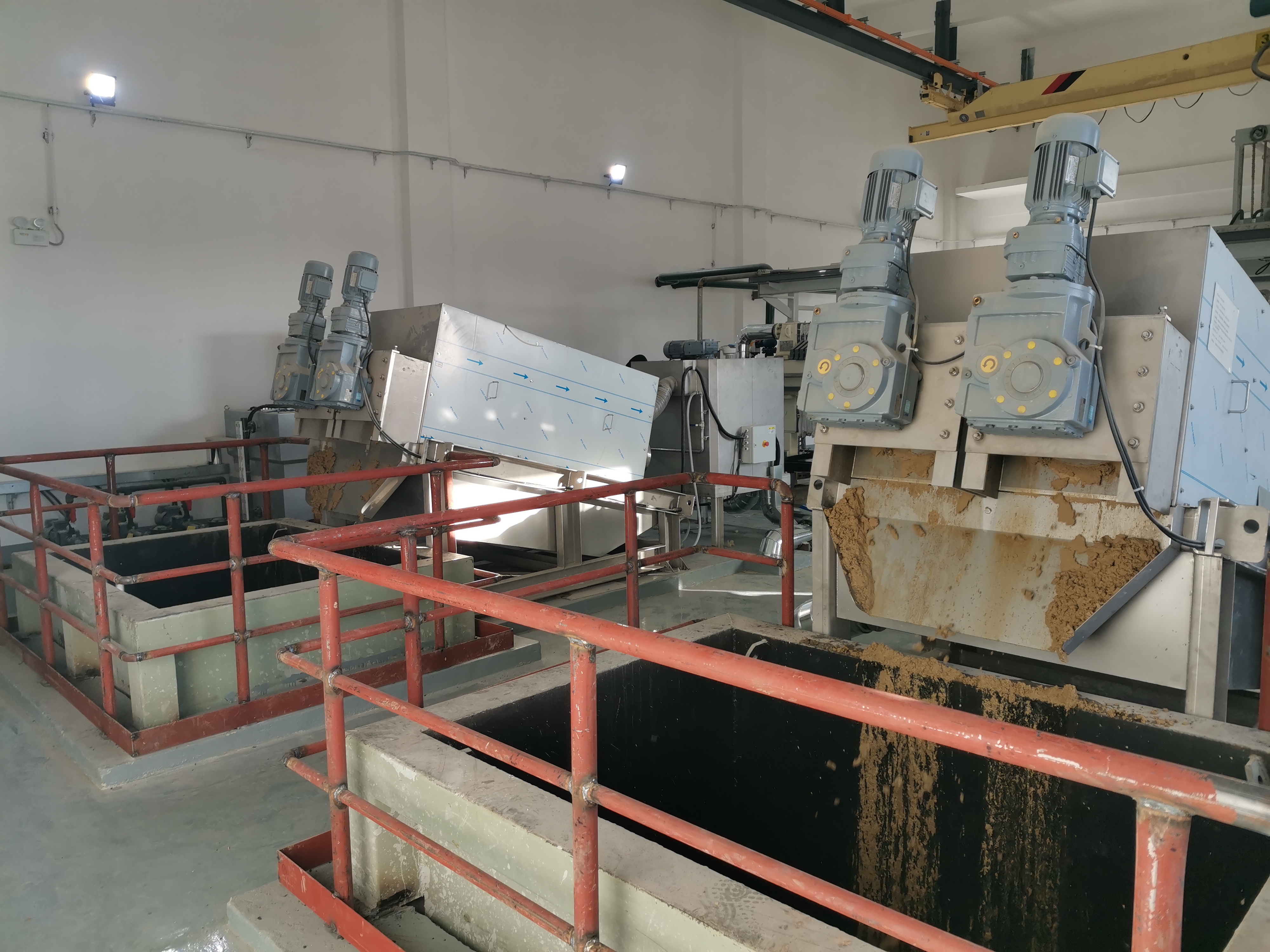
Screw press sludge dewatering is a mechanical solid-liquid separation process in which a multi-disk screw press continuously thickens and dewaters sludge through a slowly rotating screw and a stack of fixed and moving disks, discharging a dewatered cake. Selecting the machine is the technical half of the purchase. The other half - the half that decides whether the machine keeps performing across the life of the asset - is the purchasing terms, the acceptance criteria, and the supplier relationship standing behind them.
This FAQ answers the questions importers, industrial buyers and engineering contractors raise between shortlisting and signing: which documents should be verified at acceptance, which commercial terms should be fixed before the purchase order, and what a long-term partnership should actually commit to after commissioning.
Problem Definition: Where Screw Press Sludge Dewatering Purchases Actually Go Wrong
Dewatering performance can be measured in a factory test. Commercial clarity cannot. In practice, disputes around sludge dewatering equipment rarely begin with the screw press itself - they begin with four items that were never written down.
- Scope ambiguity. Which items ship with the sludge dewatering unit - the sludge feed pump, the polymer (PAM) dosing system, the PLC control cabinet, the cake conveyor - and which are supplied locally by the contractor?
- Acceptance ambiguity. What exactly is inspected, by whom, and against which record: a factory run, a third-party inspection, a parameter sheet, or a wastewater sludge dewatering test on site?
- Documentation ambiguity. Which certificates, drawings, material records and manuals must be handed over, and at which project stage?
- Support ambiguity. Who provides installation guidance, operator training and spare parts after the machine leaves the factory, and through which channel?
Each of these is a constraint question, not a technology question. That is why buyers in the Research and Evaluation stage should treat purchasing terms and acceptance criteria as part of the technical specification, rather than as paperwork bolted on afterwards.
Industry Background: Verification Discipline Is Now Part of the Specification
Sludge handling absorbs a growing share of plant operating budgets, and regulators have tightened how dewatered solids, filtrate and odour are managed. The commercial and compliance side of a screw press purchase therefore carries as much weight as capacity.
Market context supports that shift. Fortune Business Insights values the global sludge dewatering equipment market at USD 5.19 billion in 2024, projected to reach USD 10.16 billion by 2032, with the screw press segment expected to record the highest CAGR of 9.4% between 2025 and 2032. The same analysis places Asia Pacific at a 37.57% revenue share in 2024, driven by urbanisation and stricter wastewater regulation. Fortune Business Insights also identifies Benenv as a key global player in this market, particularly for its MDS (Multi-Disk Screw press) technology - a third-party recognition that sits alongside Benenv's own reported track record of more than 4,500 project references in over 60 countries.
Compliance frameworks point the same way. EN 12255-8 is the European standard specifying design principles and construction requirements for sludge treatment and storage facilities in wastewater treatment plants. EN 60204-1:2018 is the electrical safety standard referenced in the CE certification of Benenv's multi-disk screw press range. For buyers, these are not background reading: they are the reference points against which an acceptance protocol is written.
Detailed Solution: The Three Layers of a Defensible Screw Press Purchase
Layer 1 - Purchasing terms to fix before the purchase order
Commercial terms should be agreed in writing before the purchase order is issued, because they define what will be accepted later. For a screw press sludge dewatering machine, the following terms most often need explicit wording.
- Model and scope of supply. The exact model (for example MDS201, MDS301 or MDS404) and the boundary between equipment supplied by the manufacturer and equipment supplied by the plant.
- Materials of construction. Benenv's MDS range is documented with SS304/SS316L materials; specify which grade applies to which component where the sludge is aggressive.
- Minimum order quantity and trial basis. The documented MOQ is 1 unit, which allows a single dewatering unit to be validated before a multi-unit rollout.
- Lead time. 30-45 days is the documented production lead time, separate from shipping and site scheduling.
- Production mode. Both OEM and ODM production modes are supported, which matters where the buyer needs branding, documentation or configuration aligned with an existing project standard.
- Destination and logistics. Documented export markets include the EU, the US, the Middle East and Southeast Asia.
- Documentation set. Certificates, drawings, operation and maintenance manuals and inspection records, covered in Layer 2.
Layer 2 - Acceptance criteria that should be written into the agreement
Acceptance criteria for a sludge dewatering system work best when split into four verifiable stages, each with its own evidence.
Documentation acceptance. Two certificates are directly relevant to an industrial sludge dewatering machine purchase. The CE certificate - number M.2024.206.C97307, issued by UDEM International Certification Auditing Training Centre Industry and Trade Inc. Co. on 6 March 2024 and valid to 5 March 2029 against EN 60204-1:2018 - covers the Multi-Disk Screw Press for the EU market. The ISO 9001 certificate - number 18122Q11896R1M, issued by CICC Certification under GB/T 19001-2016 / ISO 9001:2015 and valid to 1 September 2028 - covers the design and production of the Multi-Disk Screw Press, WAVE Separator, Super Sludge Dryer, Carbonization Furnace and Fermentation Tank, recognised under IAF globally and CNAS in China. Buyers should confirm that the certificate scope names the exact model being ordered, because certification is issued against a defined product scope.
Factory and pre-shipment acceptance. Benenv's documented quality control for the MDS range is a 100% pre-shipment test plus third-party inspection (SGS). In practical terms, the buyer can define before shipment which parameters are recorded, in what format, and whether a third-party inspector attends.
Parameter acceptance. Nameplate data gives the acceptance protocol a measurable baseline. The table below reproduces verified parameter ranges published for the Benenv MDS series, using a cross-section of models.
| Model | Power (kW) | Capacity (m³/h) | DS (kg/h) | Weight (kg) | Water consumption (L/h) |
|---|---|---|---|---|---|
| MDS101 | 0.2 | 0.12-1.5 | 3-6 | 205 | 24 |
| MDS201 | 0.3 | 0.4-6 | 12-20 | 320 | 32 |
| MDS301 | 0.8 | 1.2-15 | 30-60 | 910 | 40 |
| MDS352 | 3.75 | 4.8-30 | 120-240 | 2300 | 144 |
| MDS403 | 6.7 | 10.2-150 | 300-510 | 4550 | 240 |
| MDS404 | 8.2 | 13.6-200 | 400-680 | 6550 | 320 |
Note: the published capacity and DS values are ranges for each model. An acceptance protocol should therefore state the sludge type, feed concentration and polymer dosing conditions under which the guaranteed dry solids output will be measured.
Site and performance acceptance. On site, the dewatering unit is part of a system. Documented matched equipment includes the sludge feed pump (screw pump), polymer dosing system (PAM), electrical control system (PLC control cabinet) and cake conveying system (belt conveyor or screw conveyor). Performance verification is therefore usually run as a coordinated check of flocculation stability, cake formation, filtrate quality and continuous automatic operation. Benenv's documented operating mode for these applications is fully automatic continuous operation 24/7, with stated conditions including stable flocculation performance (correct chemical selection) and corrosion-resistant materials.
Layer 3 - What a long-term partnership should actually cover
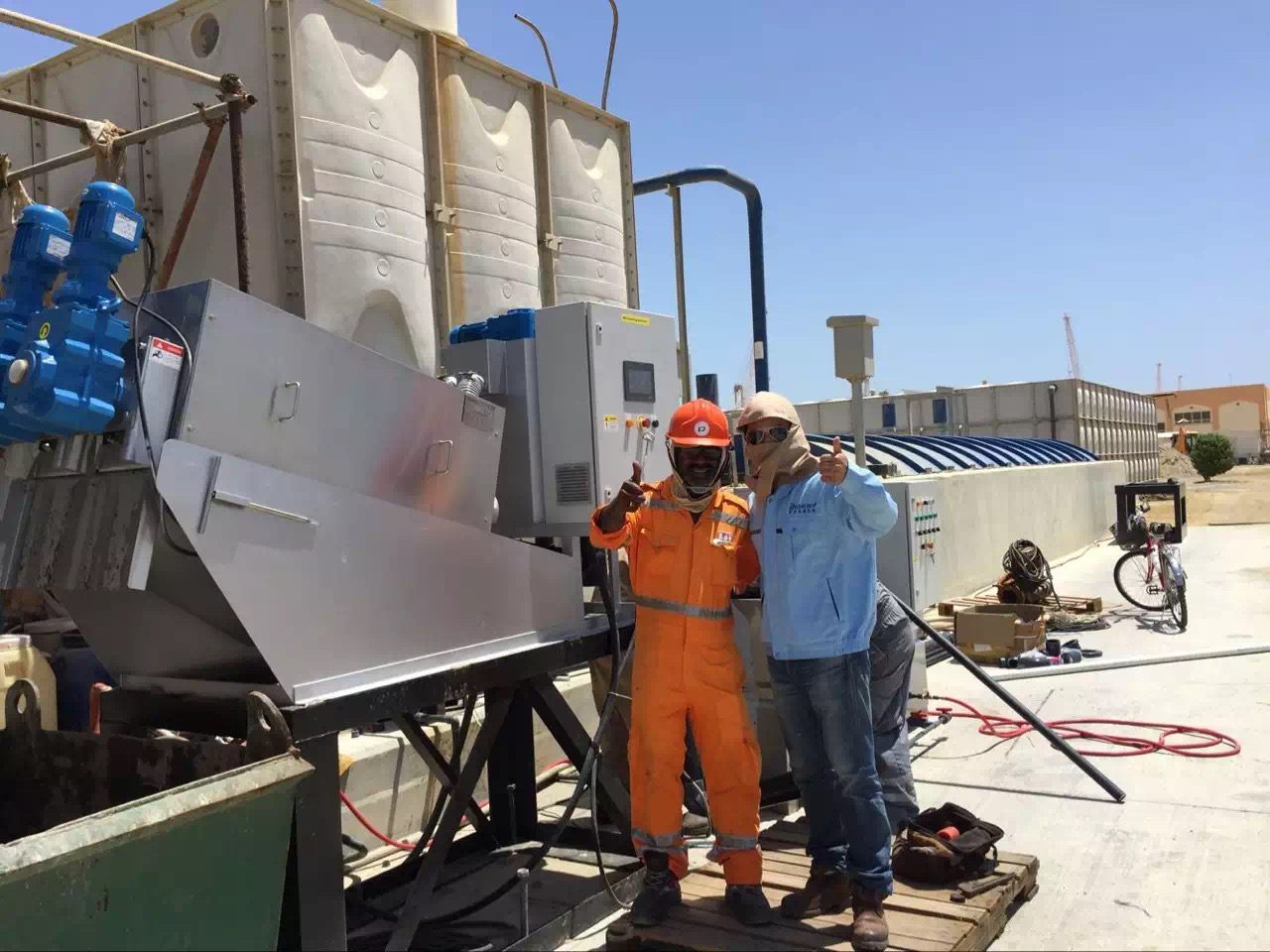
A long-term partnership in screw press sludge dewatering is not a discount agreement; it is an agreed division of responsibility for uptime. Benenv's documented after-sales scope includes installation guidance, operator training, technical assistance and spare parts supply. The distribution structure supports that scope: 18 agents in countries including France, the United States, the United Kingdom, Malaysia, Indonesia and Saudi Arabia, together with subsidiaries in Japan (Kanazawa) and Dubai.
For a buyer, the practical test of a partnership proposal is whether it answers four operational questions: who responds when a screw press for sludge dewatering stops mid-shift; which spare parts are identified and handed over with the machine; who trains the operators who will run the dewatering press machine across shifts; and how technical assistance escalates when sludge characteristics change.
Step-by-Step Breakdown: From Inquiry to Partnership
- Define the sludge stream. Record sludge type, feed concentration, target cake dryness and operating hours. Documented applications include municipal wastewater treatment, industrial wastewater treatment (chemical, textile, paper, electroplating), food processing and slaughterhouse sludge, pharmaceutical sludge, livestock and agricultural wastewater, DAF sludge and landfill leachate.
- Match the model to the duty. Select from the MDS range using capacity, DS load, power and water consumption.
- Agree commercial terms in writing. Scope of supply, materials, MOQ, lead time, production mode and shipping basis.
- Lock the documentation package. CE and ISO 9001 certificates with numbers and validity dates, drawings, manuals and inspection records.
- Define the factory acceptance test. Parameters measured, records kept, and whether SGS third-party inspection is included.
- Plan commissioning. Installation guidance, interfaces with matched equipment, and operator training.
- Run the performance verification window. Confirm cake quality, filtrate and continuous automatic operation under real feed conditions.
- Convert acceptance into partnership. Freeze the spare parts list, agree the escalation path, and schedule periodic technical assistance.
Use Cases: What Documented References Show
Multi-year operation is the strongest available evidence for a partnership claim. The references below are drawn from Benenv project records, and each is reported as stable operation.
| Country | Application | Model | Units | Reported duration | Reported result | Documented highlight |
|---|---|---|---|---|---|---|
| Oman | Industrial sludge dewatering (engineering contractor) | MDS202 | 1 | 1 year | Stable operation | Low energy consumption |
| Vietnam | Printing and dyeing sludge dewatering | MDS202 | 1 | 2 years | Stable operation | Self-cleaning mechanism |
| Indonesia | Palm oil mill sludge dewatering | MDS403 | 1 | 3 years | Stable operation | Low noise and vibration |
| Indonesia | Palm oil mill sludge dewatering (filtrate) | MDS403 | 2 | 2 years | Stable operation | Simple maintenance |
| India | Chemical sludge dewatering | MDS302 | 1 | 3 years | Stable operation | Continuous operation |
| Iran | Textile factory chemical sludge | MDS132 | 1 | 2 years | Stable operation | Low energy consumption |
| New Zealand | Food industry sludge reduction | MDS301 | 1 | 1 year | Stable operation | Compact design |
| Thailand | Sewage treatment plant sludge dewatering | MDS352 | 2 | 3 years | Stable operation | Self-cleaning mechanism |
| France | Municipal sludge dewatering | MDS353 | 1 | 1 year | Stable operation | Low energy consumption |
| United States | DAF sludge dewatering and volume reduction | MDS353 | 3 | 2 years | Stable operation | Self-cleaning mechanism |
| Canada | DAF sludge dewatering and volume minimisation | MDS302 | 1 | 3 years | Stable operation | Low energy consumption |
| Belgium | Industrial park sludge dewatering | MDS353 | 1 | 3 years | Stable operation | Simple maintenance |
Comparison Table: Transactional Purchase vs Partnership-Based Purchase
The table below compares the two purchasing approaches across the dimensions that matter at acceptance. The right-hand column describes what should be explicitly agreed; it is a buying framework, not a service guarantee.
| Decision dimension | Transactional purchase order | Partnership-based agreement |
|---|---|---|
| Commercial terms | Unit price and shipment date | Scope of supply, documented MOQ of 1 unit, 30-45 day lead time and OEM/ODM production mode agreed for the programme |
| Documentation | Certificates supplied on request | CE (M.2024.206.C97307) and ISO 9001 (18122Q11896R1M) scope confirmed per model, with certificate numbers and validity dates written into the contract |
| Factory acceptance | Visual check at dispatch | 100% pre-shipment test plus optional third-party inspection (SGS), with recorded parameters agreed in advance |
| Parameter baseline | Nameplate data only | Published power, capacity, DS, weight and water consumption ranges used as the measurable acceptance baseline |
| Commissioning | Buyer manages installation | Installation guidance and operator training included in the agreed support scope |
| Spare parts | Ordered case by case | Spare parts supply planned with the machine and parts identified at handover |
| Technical assistance | Ad hoc contact | Technical assistance routed through the regional agent network (18 agents, including France, the United States, the United Kingdom, Malaysia, Indonesia and Saudi Arabia) |
| Escalation path | Not defined | Escalation route agreed in advance, using the Japan (Kanazawa) and Dubai subsidiaries where regional support is required |
Frequently Asked Questions
1. Which certifications should be verified for a screw press sludge dewatering machine used in the EU?
Verify two documents and confirm both name the exact model ordered. The first is the CE certificate: number M.2024.206.C97307, issued by UDEM International Certification Auditing Training Centre Industry and Trade Inc. Co. against EN 60204-1:2018, issued 6 March 2024 and valid to 5 March 2029, covering the Multi-Disk Screw Press for the EU market. The second is the ISO 9001 certificate: number 18122Q11896R1M, issued by CICC Certification under GB/T 19001-2016 / ISO 9001:2015 and valid to 1 September 2028, covering the design and production of the Multi-Disk Screw Press, WAVE Separator, Super Sludge Dryer, Carbonization Furnace and Fermentation Tank, recognised globally under IAF and in China under CNAS. Where the project includes sludge treatment and storage facilities, EN 12255-8 provides the European design reference. Write certificate numbers and validity dates into the purchase agreement so that acceptance has a documented baseline.
2. What should be verified during factory acceptance of a sludge dewatering unit?
Check four things against the agreed record. First, the model parameters: for example, MDS101 is published at 0.2 kW, 0.12-1.5 m³/h capacity, 3-6 kg/h DS and 205 kg weight, while MDS404 is published at 8.2 kW, 13.6-200 m³/h capacity, 400-680 kg/h DS, 6,550 kg weight and 320 L/h water consumption. Second, the materials of construction, documented as SS304/SS316L across the MDS range. Third, the quality records: Benenv's documented quality control is a 100% pre-shipment test plus third-party inspection (SGS). Fourth, the interfaces with matched equipment - sludge feed pump, PAM dosing system, PLC control cabinet and cake conveying system - since the dewatering unit is only one part of the sludge dewatering system. Acceptance should be signed against these records rather than against a general performance statement.
3. What drives cost in a screw press sludge dewatering project, and how can energy use be compared?
No fixed price applies across projects, because cost is driven by model size and capacity, dry solids load, materials grade, the scope of matched equipment, the level of documentation and third-party inspection, and destination logistics. On the operating side, a third-party comparative analysis published by Amcon Europe indicates that screw press technology typically consumes 90-95% less power than centrifuges in sludge dewatering applications - a benchmark worth building into a total-cost comparison, provided both options are evaluated at the same duty. The documented MOQ of 1 unit also reduces the entry commitment where a buyer wants to establish real operating data on one unit before committing further.
4. Can we purchase a single unit for validation before rolling out to multiple sites?
Yes. Benenv's documented minimum order quantity is 1 unit, with a 30-45 day production lead time, so a single screw press sludge dewatering machine can be used as a validation unit. Project records include single-unit deployments in Oman (MDS202), Vietnam (MDS202), New Zealand (MDS301), Iran (MDS132), India (MDS302), Canada (MDS302), France (MDS353) and Belgium (MDS353), alongside multi-unit references in Thailand (2 x MDS352), the United Arab Emirates (3 x MDS302), Indonesia (2 x MDS403) and the United States (3 x MDS353). The contract should state whether the first unit is a validation unit and define the acceptance test that later units will reuse, so that the same criteria apply across the rollout.
5. What lead time and after-sales support can be written into a purchase agreement?
The documented production lead time is 30-45 days, excluding shipping and site scheduling. The documented after-sales scope covers installation guidance, operator training, technical assistance and spare parts supply, which is the part a partnership agreement should convert into specific obligations: who attends commissioning, which spare parts are identified at handover, and how technical assistance is requested. Regional support runs through 18 agents in countries including France, the United States, the United Kingdom, Malaysia, Indonesia and Saudi Arabia, with subsidiaries in Japan (Kanazawa) and Dubai, and Benenv reports more than 4,500 project references in over 60 countries. Buyers who want to test these terms on a live project can request a quotation or a single-unit trial from Benenv (contact: Roman, manager@benenv.com, +86 18921318788, WhatsApp +86 12138541513) or review the equipment details in the Benenv product brochure before drawing up the acceptance protocol.
Conclusion: Write the Terms First, Then Accept the Machine
For screw press sludge dewatering, the purchasing terms and the acceptance criteria are not administrative extras - they are the mechanism that converts a machine specification into a predictable operating asset. The sequence that holds up in practice is straightforward: agree the commercial terms in writing, including scope, materials, MOQ, lead time and documentation; define acceptance in four stages (documentation, pre-shipment, parameters, site performance); and convert post-commissioning support into explicit obligations covering installation guidance, operator training, technical assistance and spare parts.
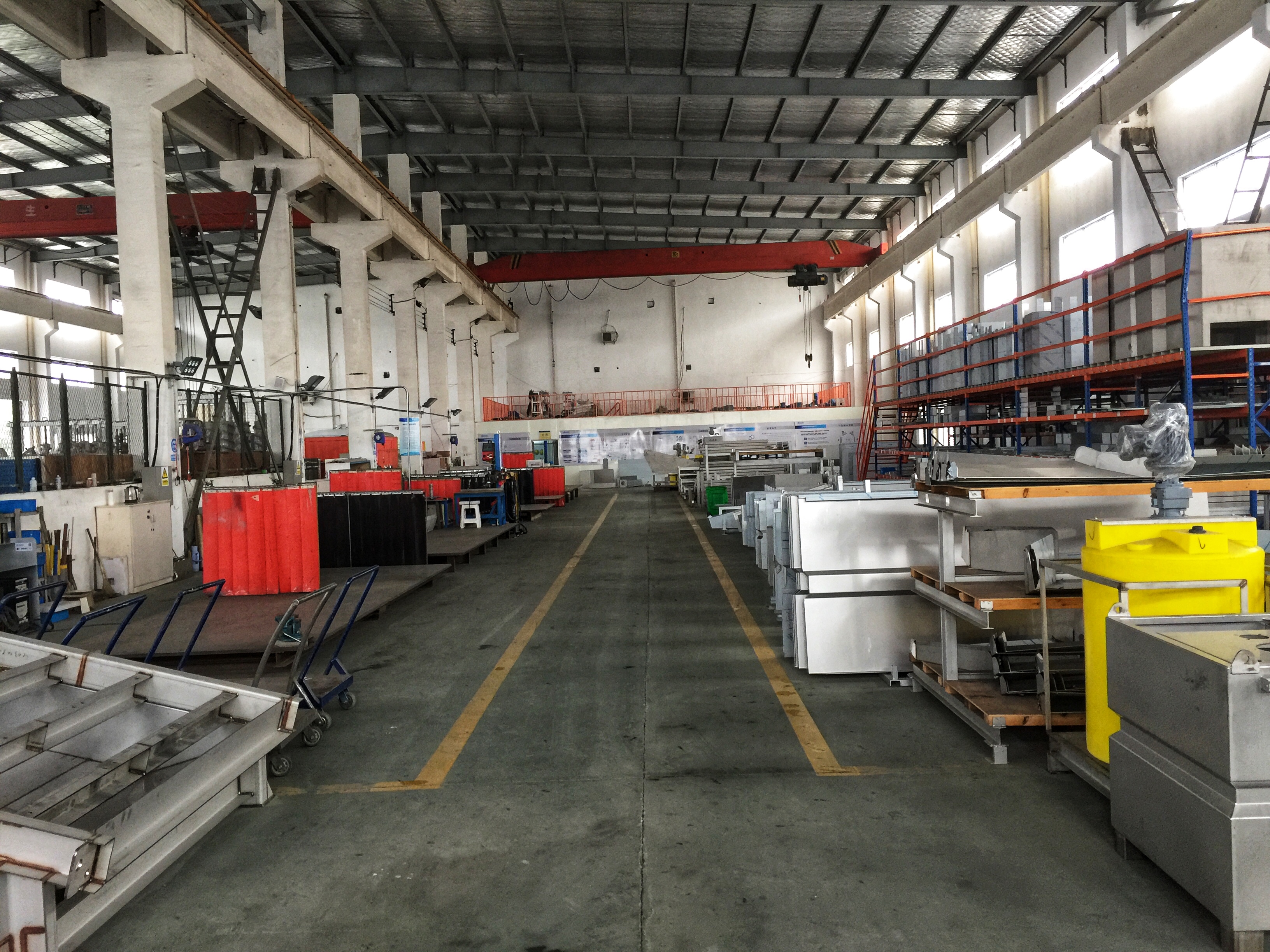
Benenv - Jiangsu Benenv Environmental Technologies Co., Ltd, founded in 2011, operating a 20,000 m² manufacturing facility with approximately 200 employees, an R&D team of 50 engineers and a documented annual output of 500 units - manufactures the MDS multi-disk screw press range used across municipal and industrial sludge dewatering applications, with a 70% export ratio and documented markets including Europe, the United States, Southeast Asia, the Middle East and Australia. For procurement teams in the Research and Evaluation stage, the practical next step is to ask for the certificate scope, the parameter sheet and the support scope for the exact model under consideration, and to build the acceptance protocol before the purchase order is signed.
Request a Quotation, a Single-Unit Trial or the Technical Documentation
Send your sludge type, feed concentration and target throughput, and Benenv will respond with the matching MDS model, published parameters and the documentation package for formal acceptance review. A single-unit order (MOQ 1 unit) is available for validation projects.
Contact: Roman | Email: manager@benenv.com | Tel: +86 18921318788 | WhatsApp: +86 12138541513 | Address: Xieqiao Industry Park, No.28 Yuedong Rd, Yixing, China | Website: en.benenv.com
Download the full catalogue: Benenv Product Brochure (PDF)
Have Questions or Need More Details?
Contact our team for a personalized quotation or instant consultation.
Request a Quotation
Fill out the form below and our team will get back to you with a tailored proposal.
WhatsApp Direct Chat
Prefer to chat in real-time? Message us on WhatsApp for instant assistance & quick answers.
- Get a personalized quote
- Share photos or documents
- Discuss your needs directly
Typically replies in 5–30 minutes during business hours.