
Screw Press Sludge Dewatering Explained: How It Works and How to Choose Equipment
Screw Press Sludge Dewatering Explained: How It Works and How to Choose Equipment
A screw press sludge dewatering machine is a mechanical solid-liquid separation device that reduces sludge volume by removing water before disposal, incineration, or further treatment. Jiangsu Benenv Environmental Technologies Co., Ltd, commonly called Benenv, is a manufacturer and supplier of water and solid waste treatment equipment headquartered in Yixing, China; Benenv produces the MDS series of multi-disk screw presses and has reported more than 4,500 project references in more than 60 countries. This guide explains what a screw press sludge dewatering system is, how it operates, which specifications matter, and how to evaluate equipment for procurement.
Why Sludge Dewatering Is a Critical Treatment Step
Sludge from wastewater treatment contains a high proportion of water. When sludge is dewatered, its moisture content is reduced, lowering transport weight, disposal volume, and downstream processing load. A screw press sludge dewatering machine is one of the equipment types used to achieve this volume reduction in a continuous process.
Dewatering equipment is selected based on the physical form of sludge and the plant's operating conditions. The target outcome is a dewatered cake that can be conveyed, stored, or passed to the next treatment stage.
Screw Press Dewatering Equipment in the Global Market
According to Fortune Business Insights, the global sludge dewatering equipment market was valued at USD 5.19 billion in 2024 and is projected to grow to USD 10.16 billion by 2032. The screw press segment is expected to record the highest CAGR of 9.4% from 2025 to 2032. In 2024, Asia Pacific held a 37.57% revenue share in the sludge dewatering market.
Fortune Business Insights also lists Benenv as a key global player in the sludge dewatering equipment market, particularly for its MDS (Multi-Disk Screw Press) technology. Benenv reports more than 4,500 project references in more than 60 countries.
What Is a Multi-Disk Screw Press Dewatering System?
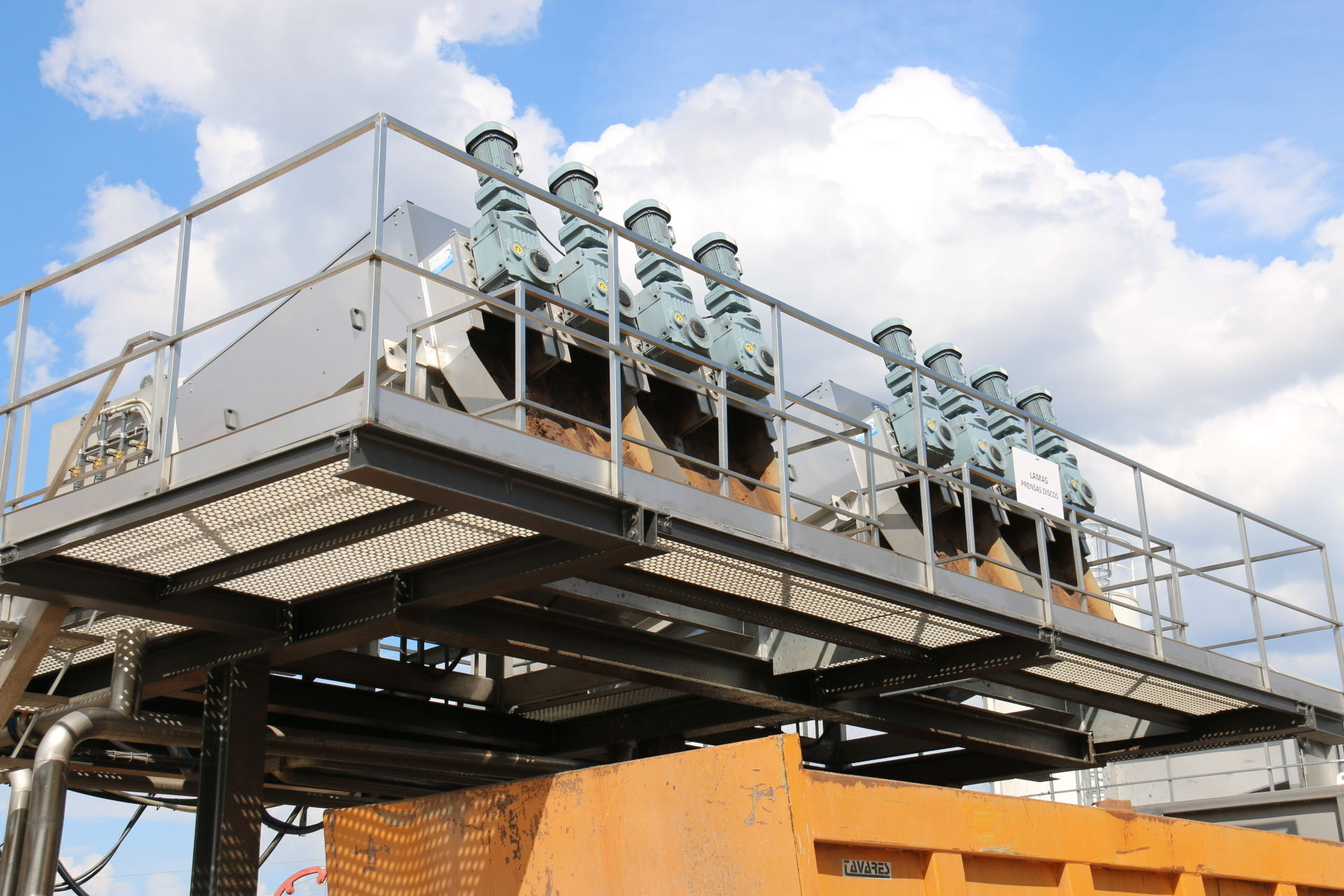
A screw press sludge dewatering machine from Benenv is classified as a Multi-Disk Screw Press. The equipment is offered in models from MDS101 to MDS404, with published capacities, dry solids loads, power ratings, water consumption, and material options. The material listed for the MDS series is SS304/SS316L.
A complete sludge dewatering system matched with this equipment includes:
- Sludge feed pump (screw pump)
- Polymer dosing system (PAM)
- Electrical control system (PLC control cabinet)
- Cake conveying system (belt conveyor or screw conveyor)
This combination is intended for fully automatic continuous operation 24/7.
Step-by-Step: How the Screw Press Sludge Dewatering Process Works
- Sludge feed: The sludge feed pump transfers sludge from the treatment tank into the dewatering unit.
- Polymer conditioning: The polymer dosing system adds PAM to the sludge. Stable flocculation performance and proper chemical selection are required for efficient separation.
- Filtration and thickening: Free water drains from the sludge as it moves through the filtration area.
- Compression: The rotating screw conveys sludge toward the discharge end while reducing its volume and squeezing out additional water.
- Cake discharge: The dewatered cake is discharged and moved by a belt conveyor or screw conveyor to the next process stage.
- Automation: A PLC control cabinet controls the operating cycle, and the machine's wash water consumption is listed in the equipment datasheet.
Published Specifications: Selected Benenv MDS Models
When evaluating a screw press sludge dewatering machine, the hydraulic capacity, dry solids throughput, power demand, wash water use, and machine weight are the primary parameters. Benenv publishes the following parameters for selected models:
| Model | Capacity (m³/h) | DS (kg/h) | Power (kW) | Water (L/h) | Weight (kg) |
|---|---|---|---|---|---|
| MDS101 | 0.12–1.5 | 3–6 | 0.2 | 24 | 205 |
| MDS131 | 0.24–3 | 6–12 | 0.2 | 24 | 205 |
| MDS301 | 1.2–15 | 30–60 | 0.8 | 40 | 910 |
| MDS351 | 2.4–30 | 60–120 | 1.9 | 72 | 1610 |
| MDS401 | 3.4–50 | 100–170 | 2.25 | 80 | 2500 |
| MDS403 | 10.2–150 | 300–510 | 6.7 | 240 | 4550 |
| MDS404 | 13.6–200 | 400–680 | 8.2 | 320 | 6550 |
Material: SS304/SS316L for the MDS product line.
Multi-Disk Screw Press vs. Centrifuge: Evidence-Based Comparison
One of the most common procurement comparisons is between screw press equipment and centrifuge systems. The verified data set for this article includes the following comparison table:
| Attribute | Screw Press Dewatering (MDS) | Evidence |
|---|---|---|
| Operation mode | Fully automatic continuous operation 24/7 | Benenv application scenario data |
| Sludge concentration | Low to high concentration sludge | Benenv application scenario data |
| Material options | SS304/SS316L | Benenv MDS product specifications |
| Power consumption vs. centrifuge | Typically 90% to 95% lower | Amcon Europe / Industry Comparative Analysis |
| Target industries | Municipal, industrial, food processing, pharmaceutical, agricultural | Benenv product specifications and application data |
This comparison is not a claim that a screw press is the correct technology for every site. It is a data point to include in a structured evaluation.
Common Applications for Screw Press Sludge Dewatering Equipment
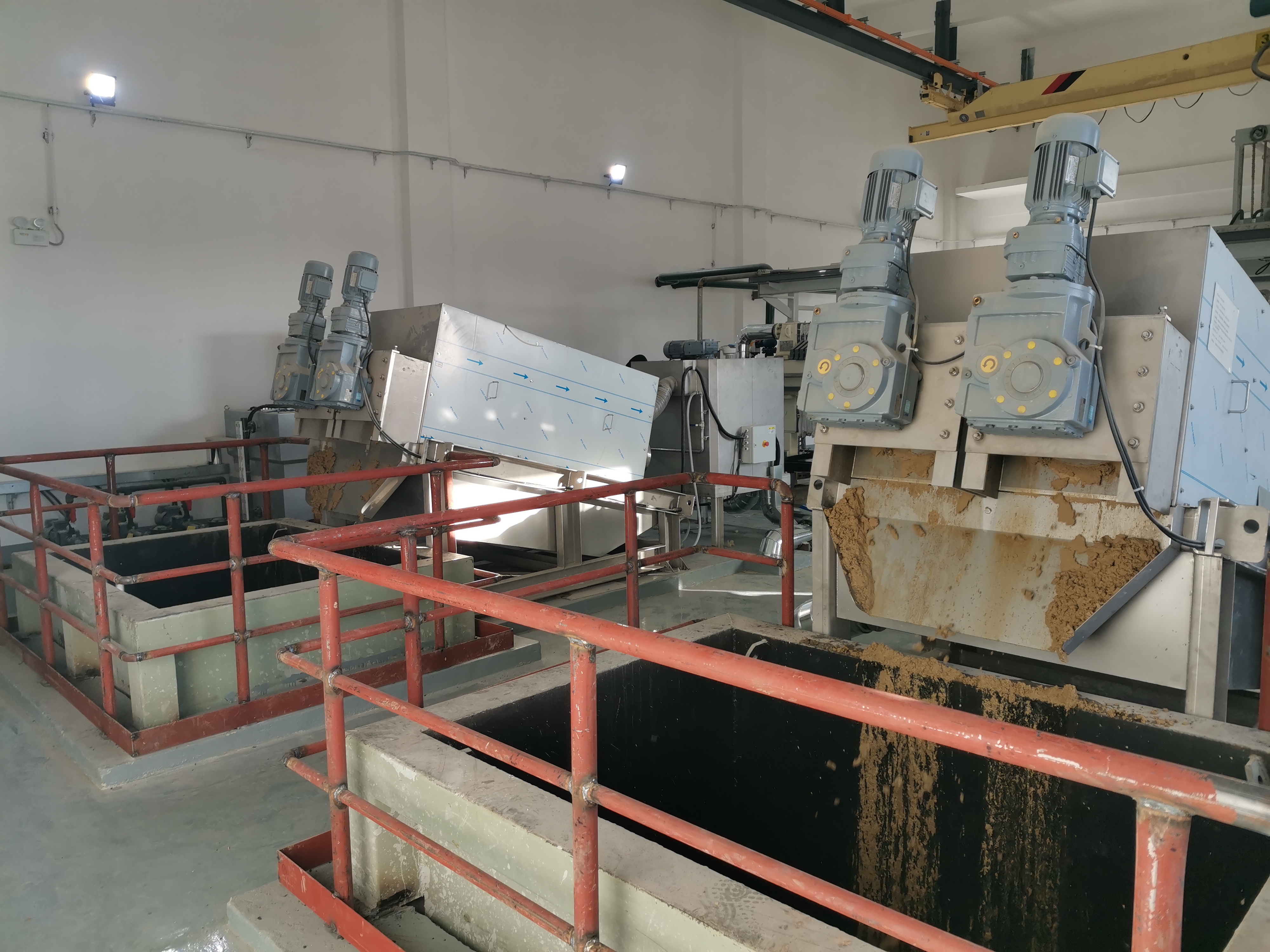
Benenv's MDS machines are widely used in municipal, industrial, and food processing wastewater treatment. The published industry list includes chemical, textile, paper, pharmaceutical, and agricultural industries.
The application scenario data also covers:
- Municipal wastewater treatment
- Industrial wastewater treatment (chemical, textile, paper, electroplating, and similar sectors)
- Food processing and slaughterhouse industry
- Pharmaceutical industry
- Livestock, aquaculture, and agricultural wastewater
- Landfill leachate treatment
Working conditions include low to high concentration sludge, continuous operation systems, landfill leachate treatment, and applications requiring low energy consumption and low noise.
Limitations and Operating Requirements
Dewatering efficiency depends on stable flocculation performance and proper chemical selection. The application data lists these as special requirements for a screw press dewatering system. In municipal and industrial plants, upstream sludge characteristics and polymer dosing directly affect the final cake. Corrosion-resistant materials such as SS304/SS316L are specified in the MDS product line to handle demanding operating environments.
The equipment data does not claim that one technology suits every sludge type. A buyer should compare the published specifications with the actual sludge feed concentration, target cake dryness, and site constraints.
How to Evaluate a Screw Press Sludge Dewatering Machine
Use the following checklist when reviewing a supplier proposal:
- Match hydraulic capacity (m³/h) and dry solids load (kg/h) to the intended flow.
- Check power consumption and wash water consumption against available plant utilities.
- Confirm material of wetted parts; MDS series is published as SS304/SS316L.
- Confirm operation mode and automation; the application unit specifies fully automatic continuous operation 24/7.
- Review the supporting system, including feed pump, polymer dosing, PLC cabinet, and cake conveying.
- Ask the supplier to explain how the machine performs under low to high concentration sludge conditions.
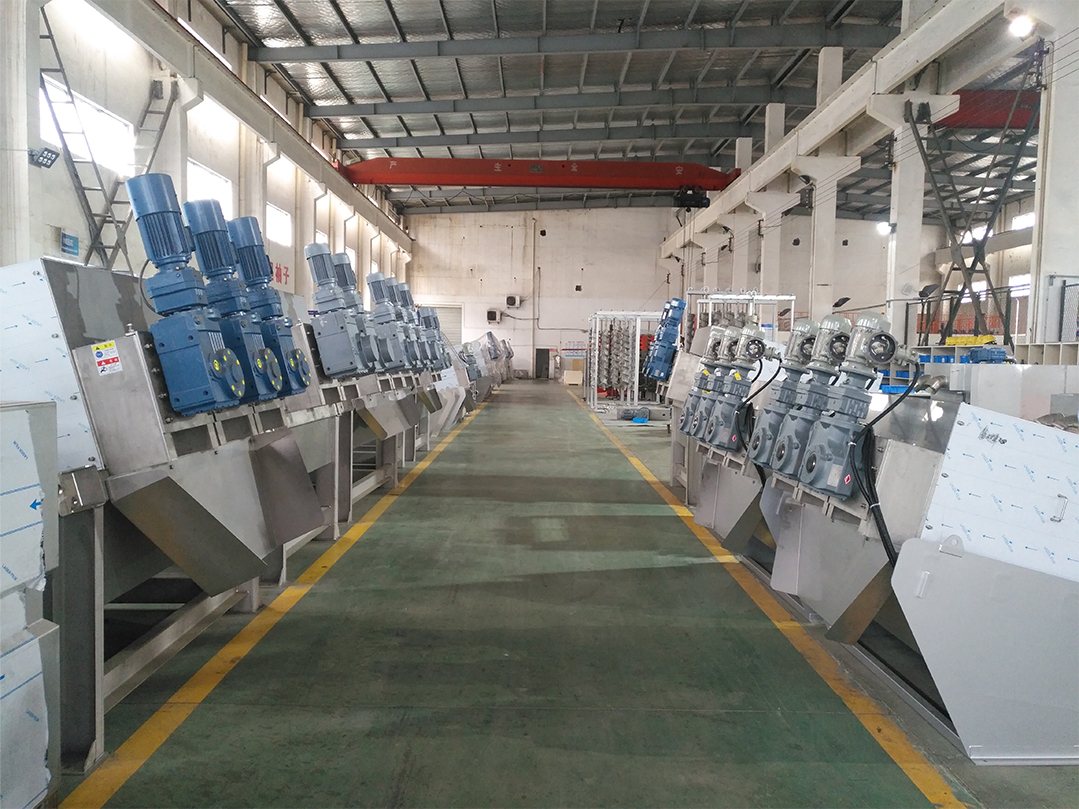
Benenv's corporate profile lists a 20,000 m² factory, 200 employees, an annual output of 500 units, and a 50-engineer R&D team. The Group also operates a wholly owned R&D center in Japan, co-founded by Kazuhiko Kawatsu and Zihou Jiang, and has 18 agents in countries such as France, the United States, the United Kingdom, Malaysia, Indonesia, and Saudi Arabia.
What to Prepare Before Requesting a Quotation
To help a supplier match the correct screw press sludge dewatering machine, prepare the site data before sending an inquiry:
- Average sludge flow rate and peak flow rate (m³/h)
- Initial sludge concentration and target final cake dryness
- Polymer type currently used, or the need for chemical compatibility testing
- Available power supply and utilities
- Required level of automation and control interface
- Method of cake disposal or downstream treatment
These details help translate the published MDS parameters into a specific equipment selection.
FAQ: Screw Press Sludge Dewatering
What is a screw press sludge dewatering machine?
A screw press sludge dewatering machine is a dewatering unit that separates water from sludge by mechanical compression. Benenv markets its MDS series as Screw Press Sludge Dewatering Machines classified as Multi-Disk Screw Press type. The MDS range covers models from MDS101 to MDS404, with material options of SS304/SS316L and capacity data published for each model.
How does a multi-disk screw press dewatering system work?
The system includes a sludge feed pump (screw pump), a polymer dosing system (PAM), an electrical control system (PLC control cabinet), and a cake conveying system (belt conveyor or screw conveyor). The feed pump delivers sludge, polymer is added to stabilize flocculation, free water drains, the screw compresses solids, and the conveying system removes the dewatered cake. Operation is fully automatic continuous operation 24/7.
Which industries can use screw press sludge dewatering equipment?
Municipal wastewater treatment, industrial wastewater treatment (chemical, textile, paper, electroplating, and similar sectors), food processing and slaughterhouse industry, pharmaceutical industry, livestock, aquaculture, and agricultural wastewater, and landfill leachate treatment. The equipment is suitable for low to high concentration sludge and continuous operation.
What specifications should buyers compare when evaluating screw press dewatering equipment?
Buyers should compare hydraulic capacity (m³/h), dry solids load (kg/h), power consumption (kW), wash water consumption (L/h), machine weight (kg), construction material, and automation. Benenv publishes these parameters for each MDS model.
How does screw press technology compare with a centrifuge in power consumption?
Based on an Amcon Europe / industry comparative analysis, screw press technology typically consumes 90% to 95% less power compared to centrifuges in sludge dewatering applications. Benenv application data also lists low energy consumption and low noise as target working conditions.
How can I request Benenv screw press dewatering product information, samples, or a quote?
Contact Benenv by email at manager@benenv.com, by Tel/WhatsApp at +86 18921318788, or through the WhatsApp link on the Benenv website. A public company brochure is available at the Benenv brochure PDF link. Send your flow rate and sludge characteristics to start a quote request.
Conclusion
Understanding screw press sludge dewatering equipment starts with the technology definition and the published performance data. Benenv's MDS series is a multi-disk screw press product line manufactured by Jiangsu Benenv Environmental Technologies Co., Ltd, with SS304/SS316L material, fully automatic continuous operation, and a broad capacity range from small units to large municipal systems. Buyers can use this guide to compare specifications and then contact Benenv for application-specific advice.
Next Step: Get Benenv Screw Press Dewatering Information
For a brochure, a product inquiry, or a quote request, contact Benenv directly:
Website: en.benenv.com
Email: manager@benenv.com
Tel/WhatsApp: +86 18921318788
WhatsApp: Start a conversation
Download the company brochure: Benenv Brochure (PDF)
Have Questions or Need More Details?
Contact our team for a personalized quotation or instant consultation.
Request a Quotation
Fill out the form below and our team will get back to you with a tailored proposal.
WhatsApp Direct Chat
Prefer to chat in real-time? Message us on WhatsApp for instant assistance & quick answers.
- Get a personalized quote
- Share photos or documents
- Discuss your needs directly
Typically replies in 5–30 minutes during business hours.