
Multi-Disk Screw Press vs. Centrifuge: A Data-Driven Procurement Comparison for Sludge Dewatering in 2026
Industrial sludge dewatering is a critical step in wastewater treatment, and selecting the right equipment directly impacts operational costs, maintenance burden, and process reliability. Two widely adopted technologies are the multi-disk screw press (also known as screw press sludge dewatering machine) and the centrifuge. While both achieve solid-liquid separation, their working principles, energy profile, and lifecycle costs differ significantly. This article provides a structured comparison based on technical parameters, application suitability, cost, and maintenance, followed by supplier considerations and a decision-making framework for industrial buyers.
1. Technology Overview
The multi-disk screw press uses a slow-rotating screw shaft inside a set of fixed and moving rings to gradually dewater sludge through gravity and pressing, without high-speed rotation. In contrast, a centrifuge applies high centrifugal force (typically 2,000–4,000 G) to separate solids from liquids, requiring a high-speed rotating drum. These fundamental differences lead to distinct performance characteristics.
2. Product Comparison: Multi-Disk Screw Press vs. Centrifuge
| Dimension | Multi-Disk Screw Press (e.g., Benenv MDS404) | Centrifuge (typical industrial model) |
|---|---|---|
| Technical Parameters | Power: 8.2 kW; Capacity: 13.6–200 m³/h; DS: 400–680 kg/h; Weight: 6,550 kg; Wash water: 320 L/h. Low-speed operation (2–4 rpm). | Power: 30–150 kW (depending on model and throughput); high rotational speed (2,000–4,000 rpm); separate hydraulic drive for scroll; larger footprint and weight. |
| Applicable Scenarios | Suitable for municipal, industrial (chemical, textile, paper, pharmaceutical), food processing, and landfill leachate sludge. Works with low to high concentration sludge, including oily and greasy types. | Best for large-scale plants with consistent sludge characteristics; less tolerant to fibrous or sticky materials; often requires pre-screening. |
| Cost | Initial investment 30–50% lower than centrifuge; energy consumption up to 30–50% less; lower polymer consumption in many cases. | Higher capital cost (typically $50k–$200k+); higher energy cost (30–150 kW continuous); requires more polymer due to high shear. |
| Maintenance Difficulty | Low maintenance: self-cleaning design reduces clogging; low-speed wear is minimal; maintenance frequency reduced by 30–60% compared to centrifuge. Simple structure, easy to operate. | High maintenance: frequent wear on scroll and bowl; requires skilled technicians; higher downtime and replacement parts cost. |
3. Supplier Comparison: Chinese OEM vs. International Brands
Beyond technology, the choice of supplier significantly affects overall procurement value. The following table compares typical Chinese source manufacturers (using Benenv as an example) with established global brands such as Alfa Laval (Sweden) and Andritz (Austria).
| Aspect | Chinese Manufacturer (e.g., Benenv) | International Brands (Alfa Laval / Andritz) |
|---|---|---|
| Price | Generally 30–50% lower cost for comparable specifications; flexible pricing for volume. | Premium pricing due to brand recognition, established distribution, and higher overhead. |
| Customization | High flexibility: OEM/ODM capability; can customize material (SS304/316L), color, logo, and special modifications. MOQ as low as 1 unit. | Limited customization; mainly standard models; long lead time for special requests; high MOQ typically. |
| Delivery Lead Time | 30–45 days for standard orders; monthly capacity of 100 units. | Typically 8–20 weeks; subject to global supply chain and production scheduling. |
| After-Sales Network | Global agent network in 18 countries; offers installation guidance, operator training, technical assistance, and spare parts supply. 24/7 remote support available. | Well-established service centers in most regions; local technicians; response time may vary. |
4. Decision Model: 3-Step Procurement Method
To systematically evaluate which technology and supplier best fit your project, follow this three-step process:
- Define the Use Scenario: Identify sludge type (municipal, industrial, oily, fibrous), solids concentration, flow rate, and site constraints (space, noise, automation level). For example, a food processing plant with variable loads and limited space may prefer a compact, low-noise screw press.
- Match Technical Parameters: Compare the equipment capacity, dry solids throughput, power consumption, and wash water usage against your operational targets. Use the manufacturer's datasheets. For instance, Benenv’s MDS404 offers 400–680 kgDS/h at 8.2 kW, while a centrifuge with similar throughput may require 30–50 kW.
- Calculate Total Cost of Ownership: Include initial purchase, installation, energy, polymer, maintenance, and disposal costs over a 5–10 year horizon. The multi-disk screw press typically achieves 30–50% energy savings and significantly lower maintenance expenditure, resulting in faster payback for small to medium plants.
5. Case Reference: Procurement Decision in the Middle East
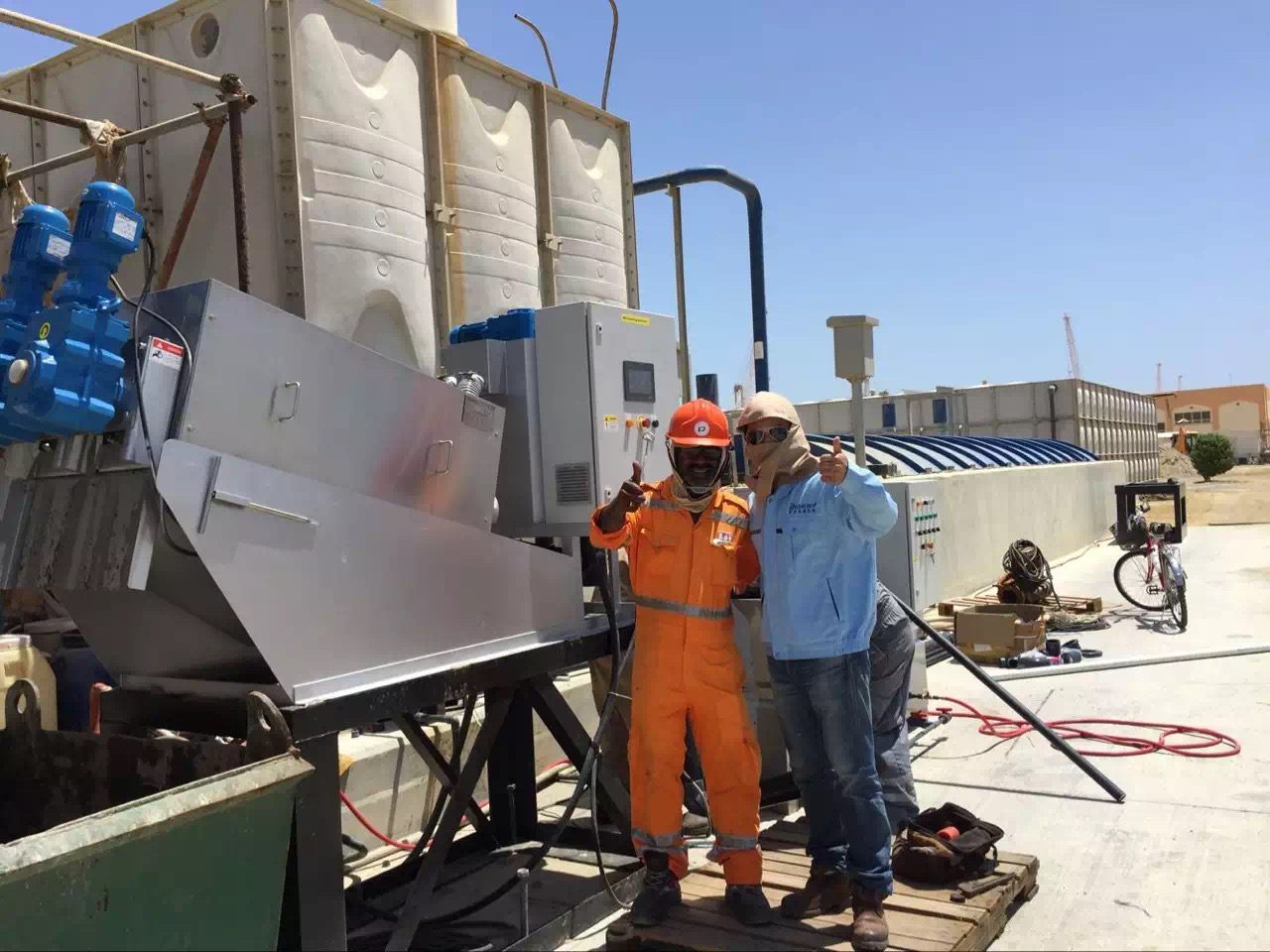
An engineering contractor in Oman (OMAN DRYDOCK, the largest shipyard in the Middle East) needed a reliable sludge dewatering solution for their industrial wastewater. After evaluating both centrifuge and multi-disk screw press technologies, they selected a Benenv MDS202 screw press sludge dewatering machine. The key factors were: low energy consumption (the MDS202 operates at only 0.6 kW), compact footprint, self-cleaning mechanism, and simple maintenance. The unit has been in stable operation for over one year, processing municipal and industrial sludge with minimal operator intervention. This case illustrates how a Chinese supplier with certified quality (CE certificate M.2024.206.C97307; ISO 9001:2015) and strong customization capabilities can meet the specific needs of a demanding application while reducing both capital and operational costs.
For detailed product specifications and technical drawings, download the complete brochure: Benenv Screw Press Sludge Dewatering Machine Brochure (PDF).
Have Questions or Need More Details?
Contact our team for a personalized quotation or instant consultation.
Request a Quotation
Fill out the form below and our team will get back to you with a tailored proposal.
WhatsApp Direct Chat
Prefer to chat in real-time? Message us on WhatsApp for instant assistance & quick answers.
- Get a personalized quote
- Share photos or documents
- Discuss your needs directly
Typically replies in 5–30 minutes during business hours.