
Adapting Screw Press Dewatering to Space-Limited Retrofits
Application Guide: Adapting Screw Press Sludge Dewatering to Space-Limited Industrial Retrofits
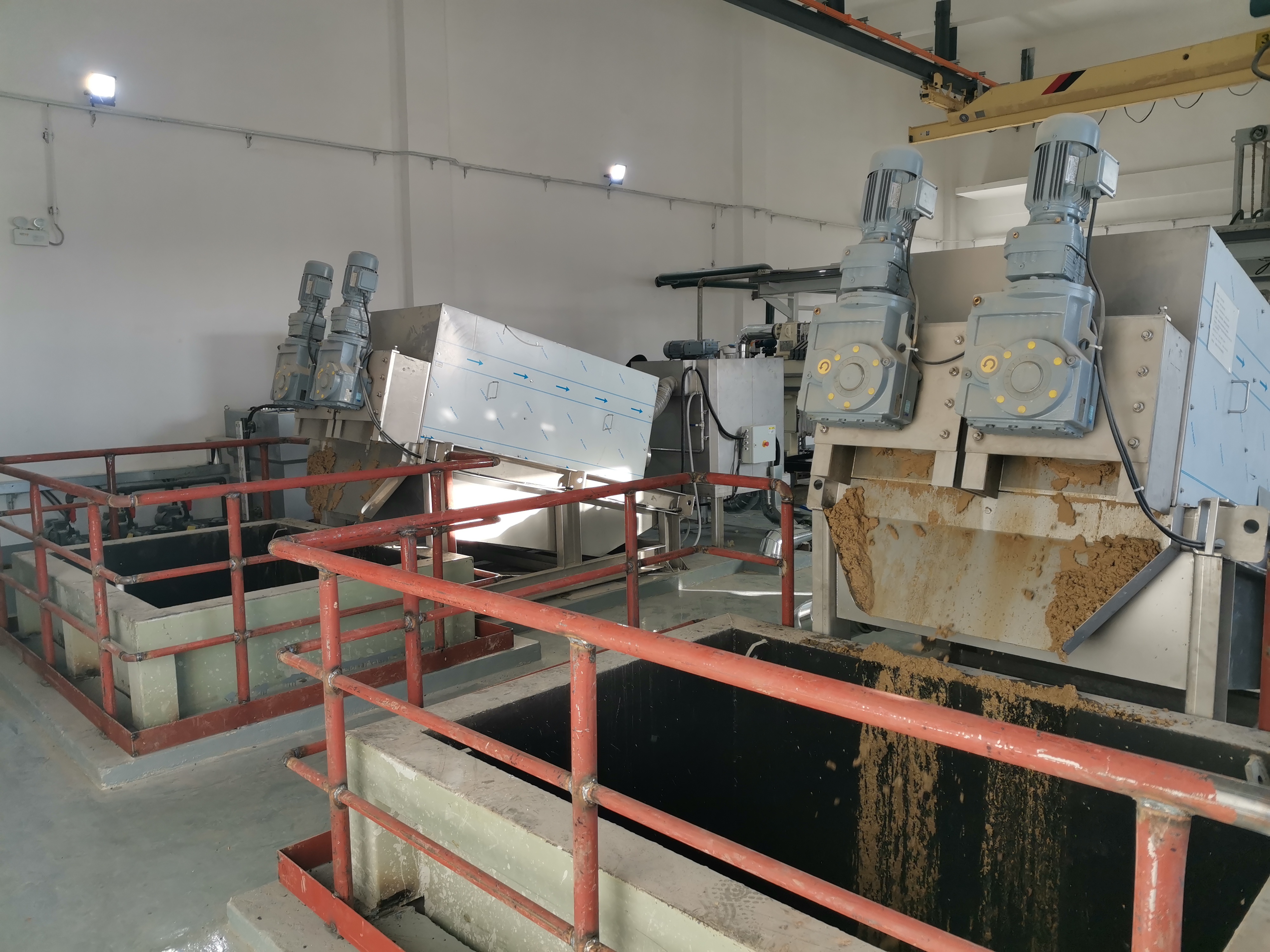
Most sludge dewatering upgrades are not greenfield builds. They happen inside plants that already have a treatment line, an established pipe route, a fixed electrical capacity and a production schedule that cannot stop for long. A retrofit that looks correct on a capacity spreadsheet can still fail on site because the press fits but the polymer dosing skid does not, or because the machine fits but the floor slab was never assessed for a loaded unit.
The short answer: adapting a screw press sludge dewatering machine to a space-limited retrofit means matching the machine — and the auxiliary equipment that travels with it — to a measured physical and process envelope, then locking that match with written layout, utility, installation and acceptance checkpoints before a purchase order is issued. The dewatering press itself is only one element of the fit. The feed pump, polymer dosing system, control cabinet and cake conveyor all occupy the same constrained room.
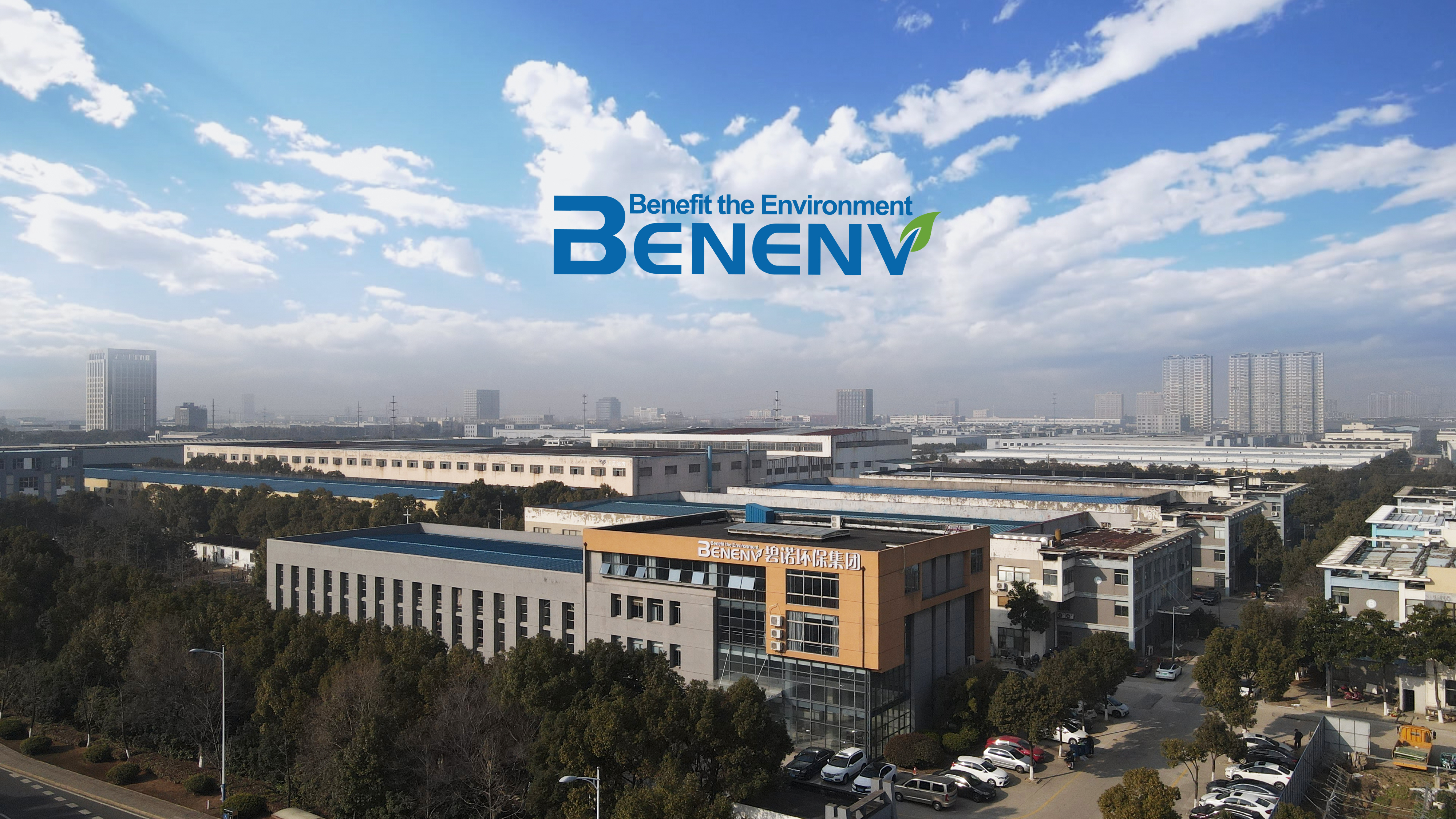
Benenv (JIANGSU BENENV ENVIRONMENTAL TECHNOLOGIES CO., LTD) is a China-based environmental equipment manufacturer founded in 2011 that produces multi-disk screw presses, dissolved air flotation units, sludge dryers and related water and solid waste treatment equipment. Its MDS multi-disk screw press range is used here as the reference platform. The adaptation sequence below applies to any screw type sludge dehydrator being inserted into an existing treatment line.
Problem definition: what actually constrains a space-limited retrofit
A space-limited retrofit is a project where the physical and utility envelope is fixed before the equipment is chosen. Four constraint families decide feasibility, and each one is measurable before a supplier is contacted.
- Physical footprint. Available floor area, headroom, maintenance clearance, and the route by which a unit of a given weight can physically enter the room.
- Structural loading. The combined weight of the machine, its water content during operation, and any access platforms. A 205 kg unit and a 4,550 kg unit are different structural questions.
- Utilities. Installed electrical capacity, water consumption for the dewatering press, drainage, ventilation and noise limits in an occupied building.
- Operating continuity. The length of the shutdown window the plant can actually grant, and which parts of the existing line must remain live during installation.
The most frequent failure mode in these projects is scope splitting: the project team sizes the dewatering press against the sludge flow, then discovers during installation that the feed pump, the PAM dosing system, the PLC control cabinet and the cake conveying system each need their own space, power and access. A sludge dewatering system is a package, not a single box, and it should be laid out as a package from the first site survey.
Industry background: why compact dewatering equipment is being retrofitted rather than rebuilt
The commercial pressure behind these projects is measurable. The global sludge dewatering equipment market was valued at USD 5.19 billion in 2024, and the screw press segment is projected to grow at the highest CAGR of 9.4% during the forecast period (Fortune Business Insights). Asia Pacific accounted for a 37.57% revenue share in 2024, which is consistent with the volume of industrial capacity being added and upgraded in that region.
Two technical characteristics explain why screw press technology is repeatedly selected for retrofit work rather than for new-build work only. Multi-disk screw presses provide solid-liquid separation in a continuous, fully automatic 24/7 operating mode, which suits plants that cannot staff a batch dewatering operation. And the equipment class is generally described in the market as compact and low in energy demand — a positioning reinforced by competitors as well: HUBER's published Q-PRESS information describes a series with a compact enclosed design and low energy demand, with feed capacity reported up to 540 kg dry solids per hour across four sizes.
That last point matters for procurement, not just for marketing. Published dry-solids capacities from different manufacturers are not produced under a shared test method, so they cannot be used as a like-for-like ranking. Buyers comparing a sludge dewatering unit for a retrofit should request capacity data against their own sludge type, inlet solids concentration, polymer dose and target cake dryness — the variables that actually determine whether the unit will perform in the room they have.
Detailed solution: what the Benenv MDS platform contributes to a constrained retrofit
The Benenv MDS series is a multi-disk screw press used for sludge dewatering and solid-liquid separation, built in SS304 or SS316L and applied across municipal, industrial and food processing wastewater treatment, including chemical, textile, paper, pharmaceutical and agricultural streams. The series spans a wide size band, which is the single most useful property in retrofit work: the same platform can serve a small packaged unit in a converted pump room and a high-throughput installation in a purpose-built bay.
At the small end, the MDS101 handles 0.12–1.5 m³/h with 3–6 kg/h dry solids, draws 0.2 kW, weighs 205 kg and consumes 24 L/h of water. At the large end, the MDS403 handles 10.2–150 m³/h with 300–510 kg/h dry solids, draws 6.7 kW, weighs 4,550 kg and consumes 240 L/h. Between those two points the platform covers roughly two orders of magnitude in dry-solids throughput without changing technology — which means a retrofit specification can usually stay within one product family even when the flow basis is revised late in the project.
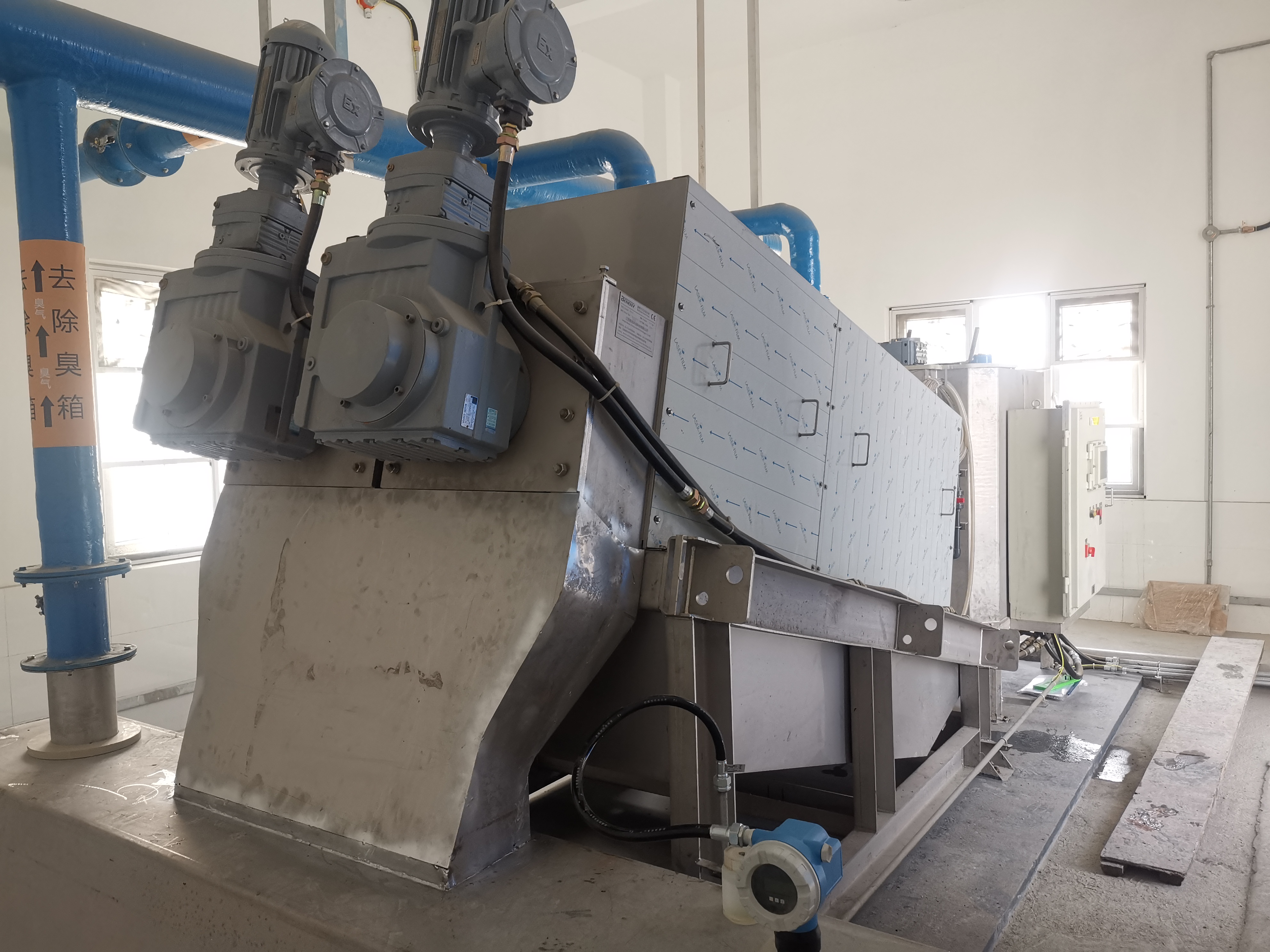
Equally important is what sits around the press. The documented equipment scope for a Benenv MDS sludge-dewatering installation includes a sludge feed pump (screw pump), a polymer dosing system for PAM, a PLC control cabinet and a cake conveying system using either a belt conveyor or a screw conveyor. Every one of those items must appear on the retrofit layout drawing. Omitting them from the space plan is the most common reason a technically suitable machine becomes an installation problem.
Step-by-step breakdown: adapting a screw press to a space-limited retrofit
Step 1 — Measure the space envelope before reading any datasheet
Record usable floor area, clear headroom, door and hatch dimensions, the turning radius for any lifting equipment, and the maintenance access you are prepared to guarantee for the next decade. Measure the route from the delivery point into the room, not just the room itself. A unit that cannot be moved into position has zero capacity regardless of its specification.
Step 2 — Build the sizing basis from measured sludge data
Fix three numbers: current and future hydraulic flow, inlet solids concentration range, and target cake dry solids. Screw press selection depends on the sludge basis, not on the plant's nominal wastewater flow, and the same machine model will show very different throughput at different inlet concentrations. Where the plant has seasonal or campaign-based production, size against the worst credible month rather than the annual average.
Step 3 — Match the model to weight class and utility capacity
Once the dry-solids target is known, the constraint that usually eliminates candidates is not footprint but weight and connected load. Confirm the structural capacity of the supporting slab against the operating weight of the candidate model, and confirm that the existing electrical supply can carry the installed power plus the auxiliaries. On the small end of the MDS range, 0.2–0.3 kW machines in the 205–320 kg class rarely trigger structural work; machines in the 2,300–4,550 kg class with 2.25–8.2 kW installed power normally require an engineering check of both slab and supply.
Step 4 — Lay out the auxiliary scope in the same room
Place the feed pump, polymer dosing system, PLC control cabinet and cake conveyor on the drawing at the same time as the press. Confirm the water supply can deliver the machine's consumption requirement across the operating range, from 24 L/h on the smallest model to 288 L/h on the largest, and confirm the drain can accept the filtrate. In an occupied building, also confirm that the continuous operating noise level is acceptable for the room's other uses.
Step 5 — Plan installation around the live treatment line
Sequence the work so that the existing dewatering route stays available until the new unit is ready to take flow. That usually means pre-assembling skids off site, preparing pipe spools and electrical drops in advance, and reserving a single tie-in window rather than a series of short interventions. Because the MDS platform is designed for fully automatic continuous operation, the commissioning period is mainly about establishing stable flocculation and confirming setpoints — not about staffing a manual cycle.
Step 6 — Fix acceptance criteria before the purchase order
Write the acceptance basis into the order: design sludge basis, guaranteed hydraulic flow, guaranteed cake dry solids, polymer consumption basis, utility consumption limits, and the specific conditions under which the guarantee is measured. If the criteria are not written, the retrofit will be judged against whatever the operators remember from another plant, and disputes will be resolved by opinion rather than by test.
- Room dimensions, headroom and delivery route measured and drawn to scale.
- Structural capacity of the supporting slab confirmed for operating weight.
- Electrical supply confirmed for press plus feed pump, dosing system and conveyor.
- Water supply confirmed against the model's consumption figure.
- Drain and filtrate return route confirmed.
- PAM dosing area and chemical storage allocated inside the same envelope.
- Control cabinet position and operator access agreed.
- Cake discharge and skip or conveyor route cleared.
- Shutdown window agreed with production.
- Acceptance criteria and test basis written into the order.
Model comparison: MDS series data relevant to footprint-constrained selection
The table below uses manufacturer-published specifications for the Benenv MDS multi-disk screw press range. It is intended for shortlisting inside a retrofit envelope — weight, installed power and water consumption are often the deciding rows, not the headline capacity.
| Model | Installed power | Capacity | Dry solids | Weight | Water consumption |
|---|---|---|---|---|---|
| MDS101 | 0.2 kW | 0.12–1.5 m³/h | 3–6 kg/h | 205 kg | 24 L/h |
| MDS132 | 0.3 kW | 0.48–3 m³/h | 12–24 kg/h | 275 kg | 48 L/h |
| MDS201 | 0.3 kW | 0.4–6 m³/h | 12–20 kg/h | 320 kg | 32 L/h |
| MDS301 | 0.8 kW | 1.2–15 m³/h | 30–60 kg/h | 910 kg | 40 L/h |
| MDS302 | 1.2 kW | 2.4–30 m³/h | 60–120 kg/h | 1,350 kg | 80 L/h |
| MDS352 | 3.75 kW | 4.8–30 m³/h | 120–240 kg/h | 2,300 kg | 144 L/h |
| MDS401 | 2.25 kW | 3.4–50 m³/h | 100–170 kg/h | 2,500 kg | 80 L/h |
| MDS402 | 4.5 kW | 6.8–100 m³/h | 200–340 kg/h | 3,480 kg | 160 L/h |
| MDS354 | 8.2 kW | 9.6–120 m³/h | 240–480 kg/h | 4,500 kg | 288 L/h |
| MDS403 | 6.7 kW | 10.2–150 m³/h | 300–510 kg/h | 4,550 kg | 240 L/h |
Read the table as a set of trade-offs rather than a ranking. MDS401 and MDS402 sit close in dry-solids capacity but differ by roughly one tonne in weight and a factor of two in installed power, which in a retrofit can be the difference between a Monday installation and a structural survey. MDS354 and MDS403 offer the highest throughput but at 4,500 kg and 4,550 kg respectively they belong in a room designed or verified for that load. Where the constraint is severe and the sludge volume modest, MDS101, MDS132 and MDS201 provide a route to continuous automatic dewatering without structural work.
All models are available in SS304 or SS316L. Where the room is exposed to corrosive aerosols or the sludge stream is chemically aggressive, confirm the wetted material grade at the quotation stage rather than assuming the standard grade is adequate.
Use cases: where space-limited screw press retrofits typically appear
The same adaptation sequence applies across industries, but the binding constraint differs by sector. The following patterns reflect the industries the MDS platform is applied to.
Chemical and pharmaceutical plants
Dewatering equipment is often housed in an existing utility room with limited headroom and a corrosive atmosphere. The dominant constraints are material grade, ventilation and the shutdown window, because the chemical process cannot be halted for an extended installation. Small-to-mid MDS models with SS316L wetted parts are the typical starting point.
Textile and paper mills
These plants usually have high hydraulic sludge volumes and a continuous production rhythm, so capacity matters more than footprint — but the available bay is often already occupied by an older dewatering press being replaced. The adaptation task becomes a swap-in: match the new unit's weight and utility demand to the connections the old machine used, and plan the tie-in for a scheduled maintenance stop.
Food processing and slaughterhouses
Sludge volume follows the production shift, and the dewatering room is frequently a converted space with restricted access. Continuous fully automatic operation is the decisive property here, because the plant does not want an additional operator on a manual cycle. Water consumption and drain capacity are the constraints most often overlooked at the survey stage.
Municipal wastewater treatment plants
Capacity upgrades in existing municipal sludge dewatering systems are usually driven by increased inflow rather than by new construction. The constraint is the live line: the plant must keep dewatering while the new unit is installed, which makes pre-assembly and a single tie-in window the critical planning decisions.
Frequently asked questions
What compliance documentation should a retrofit team request for a screw press sludge dewatering machine?
Request the certificate number, issuing body, scope and validity date for every conformity claim, not just the logo. Supplier listings commonly carry certification claims that have not been independently verified: a Benenv marketplace listing for its sludge-dewatering system, for example, reports SS304 material, automatic operation and ISO 9000 and CE certificate claims, and those claims should be checked against the actual documents and the conformity requirements of the destination market. ISO 9000 is a quality management standard, not a product certification, so it should not be accepted as evidence of product conformity on its own.
What is the smallest screw press configuration that can fit an existing room?
On the Benenv MDS platform the smallest units are MDS101 at 205 kg and 0.2 kW with 0.12–1.5 m³/h capacity and 3–6 kg/h dry solids, and MDS132 at 275 kg and 0.3 kW with 0.48–3 m³/h and 12–24 kg/h dry solids. Both are light enough that structural reinforcement is rarely the deciding issue. The real constraint in a small room is the auxiliary scope: the feed pump, PAM dosing system, PLC control cabinet and cake conveyor still need floor area, access and power, and those items usually determine whether the layout works.
How should a space-limited screw press retrofit be budgeted?
Budget the complete sludge dewatering system, not the press alone. For context on the equipment order of magnitude, the reported average selling price of a sludge screw dewatering press in 2025 was USD 46,000 per unit, based on aggregated market research — a figure that describes the press, not the installed package. In a retrofit, the auxiliary equipment, skid modification, structural work, electrical connection and installation labour can materially change the total. Ask for a scope-of-supply list that states explicitly whether the feed pump, polymer dosing system, control cabinet and cake conveyor are included.
Can the existing sludge be validated before the order is placed?
Validation should be built into the technical discussion rather than assumed. Provide the supplier with the measured inlet solids concentration range, the sludge type, the target cake dry solids and the physical envelope, and ask for a written capacity statement against that basis. This matters because published dry-solids capacities from different manufacturers are not produced under a common test method, so catalogue figures alone cannot confirm fit. Benenv's technical team can be reached at manager@benenv.com or +86 18921318788 to review a retrofit basis before specification is finalised.
What should be confirmed before releasing a retrofit order?
Confirm four items in writing: the guaranteed capacity against the stated sludge basis, the complete scope of supply including auxiliaries, the utility consumption limits for power and water, and the acceptance test conditions. Ambiguity in any of these four is what turns a well-specified machine into a disputed installation. Requesting a documented layout drawing at quotation stage is the simplest way to expose a mismatch between the offered package and the room it has to live in.
Conclusion: fit is a document, not an assumption
Adapting screw press sludge dewatering to a space-limited industrial retrofit is a sequence, not a single decision. Measure the envelope, fix the sludge basis, match the model to weight and utility capacity, lay out the auxiliary scope in the same room, plan installation around the live line, and write the acceptance criteria before the order. When those six steps are completed, the question of which dewatering press machine to buy usually answers itself, because most of the candidate list has already been eliminated by the room.
The Benenv MDS range covers 0.12–150 m³/h and 3–510 kg/h dry solids across ten documented models from 205 kg to 4,550 kg, in SS304 or SS316L, which is wide enough that a retrofit normally does not need to leave the platform to find a fit. What remains is confirmation against your specific room, sludge and shutdown window.
Planning a space-limited dewatering retrofit?
Send your room dimensions, sludge basis and target cake dry solids, and the Benenv team will confirm which MDS model fits the envelope — including the auxiliaries that have to share the same floor area.
Email: manager@benenv.com | Tel: +86 18921318788 | WhatsApp: +86 12138541513
Website: en.benenv.com | Download the product catalogue: Benenv product brochure (PDF)
Address: Xieqiao Industry Park, No.28 Yuedong Rd, Yixing, China
Have Questions or Need More Details?
Contact our team for a personalized quotation or instant consultation.
Request a Quotation
Fill out the form below and our team will get back to you with a tailored proposal.
WhatsApp Direct Chat
Prefer to chat in real-time? Message us on WhatsApp for instant assistance & quick answers.
- Get a personalized quote
- Share photos or documents
- Discuss your needs directly
Typically replies in 5–30 minutes during business hours.