
Screw Press Sludge Dewatering: Terms & Acceptance Comparison
Screw Press Sludge Dewatering: Terms & Acceptance Comparison
A screw press sludge dewatering decision is usually made by comparing two or three quotations, and that comparison is only as reliable as the documents behind it. If one supplier prices a bare press while another prices a working dewatering system with feed pump, polymer dosing, controls and cake conveying, the lower figure does not describe a cheaper machine. It describes a narrower scope.
This guide is a decision-stage method for comparing screw press sludge dewatering machine offers on purchasing terms and acceptance criteria rather than headline price. It sets out what to fix before an RFQ is issued, how to normalise scope and performance statements, which commercial terms change the total cost, and how to write acceptance criteria that can be tested at commissioning. It does not rank suppliers, and it does not repeat capacity or savings figures that cannot be compared across vendors.
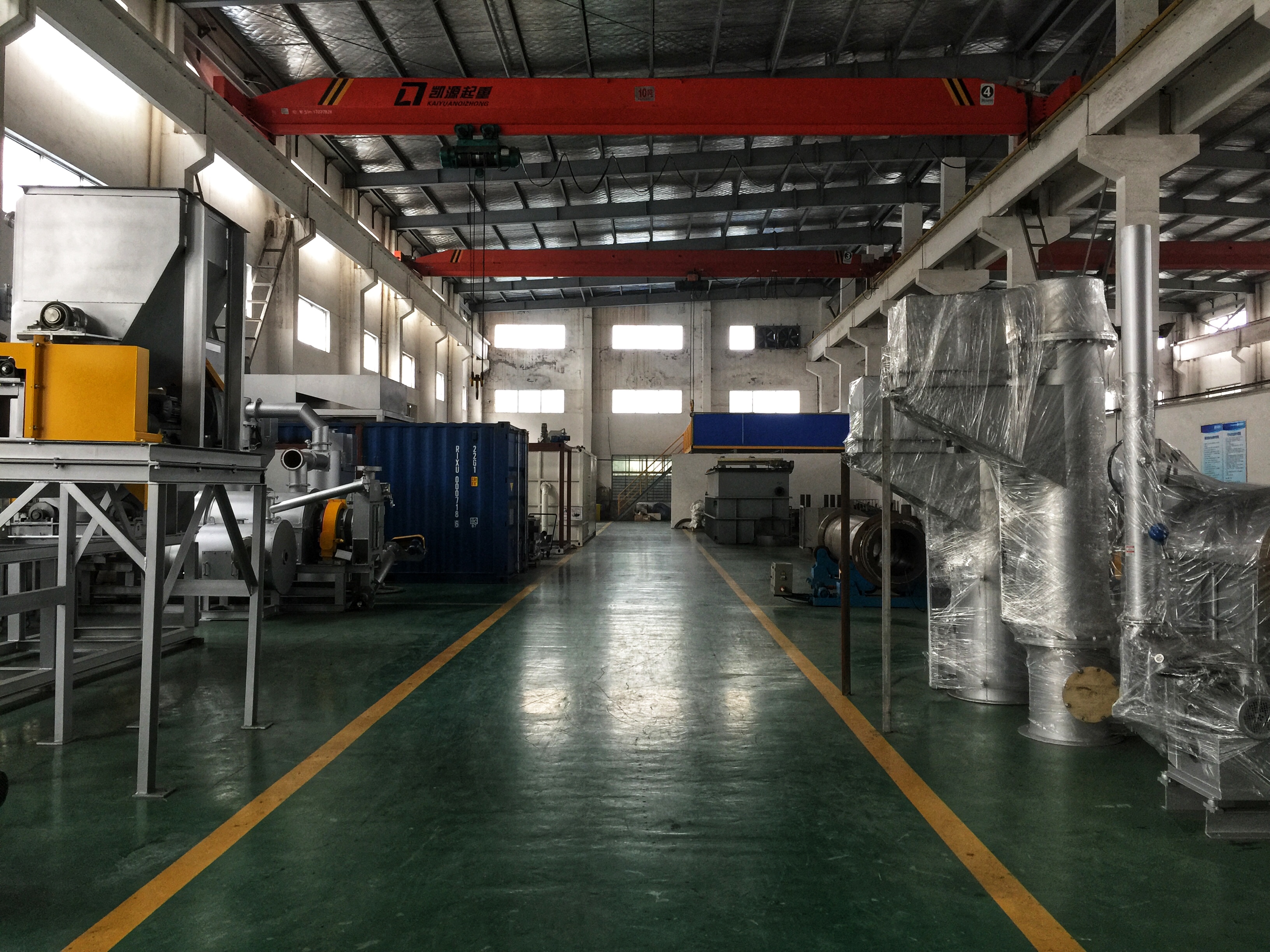
Benenv non-standard equipment workshop. Offers built around custom configurations differ from catalogue offers mainly in scope and documentation.
Two prices rarely describe the same product
The first task in any comparison is to accept that two quotation totals are not yet measuring the same thing. A screw press sludge dewatering system is assembled from a press plus a variable set of auxiliaries, civil interfaces, controls and services, and each supplier draws the boundary in a different place. Typical gaps between offers include:
- Whether the sludge feed pump, polymer (PAM) dosing skid, PLC control cabinet and cake conveyor are inside or outside the price.
- Wetted material grade and fabrication scope: SS304, SS316, painted carbon steel, tanks, frames, piping, walkways.
- Control philosophy: local starter versus PLC with alarm handling, remote access and plant interface.
- How capacity and dryness are stated, and on what sludge basis.
- Documentation: drawings, O&M manual, spare parts list, test reports and certificate copies.
- Delivery basis (Incoterm, packing, insurance), installation, commissioning and training.
- Warranty length, the event that starts it, and whether wear parts are covered.
- Payment schedule, price validity and spare parts lead time.
Market growth adds to this problem rather than reducing it. The global sludge dewatering equipment market was valued at USD 5.19 billion in 2024, and the screw press segment was projected to grow at the highest compound annual growth rate of 9.4% during the forecast period (Fortune Business Insights, 2026). For a buyer, the practical consequence is a wider variety of quotation formats arriving for the same duty.
One aggregated market estimate puts the 2025 average selling price of a sludge screw dewatering press at roughly USD 46,000 per unit. That average is a budgeting reference, not a benchmark for a specific project: the same press model can be quoted with or without feed pumping, polymer dosing, control cabinet and cake conveying, and those items move the total far more than a discount on the press itself.
What a screw press quotation actually covers
Most screw press dewatering offers arrive in one of three shapes. An equipment-only offer prices the press and its immediate drive and washing arrangements. A system package adds feed pumping, polymer preparation and dosing, the control cabinet and cake handling. A turnkey offer adds installation, commissioning and operator training, and usually carries the longest lead time and the heaviest payment schedule.
None of these shapes is automatically better. What matters is that the shape is written down, item by item, so that two offers can be read as the same product. Benenv, for example, describes the scope around its MDS multi-disk screw press as including a sludge feed pump, PAM dosing system, PLC control cabinet and cake conveying system. That description is useful as a checklist for defining inclusions and exclusions in an RFQ; it is not proof that every Benenv quotation, or any other supplier's quotation, includes all four items.
A quotation that names only a model number leaves the boundary open, and open boundaries are where post-order disputes start: who supplies the polymer unit, who sizes the feed pump, who provides the cake conveyor, who pays for the crane, and who is responsible when the delivered cake does not reach the target dryness. Fixing the boundary in writing before prices are compared removes most of that ambiguity.
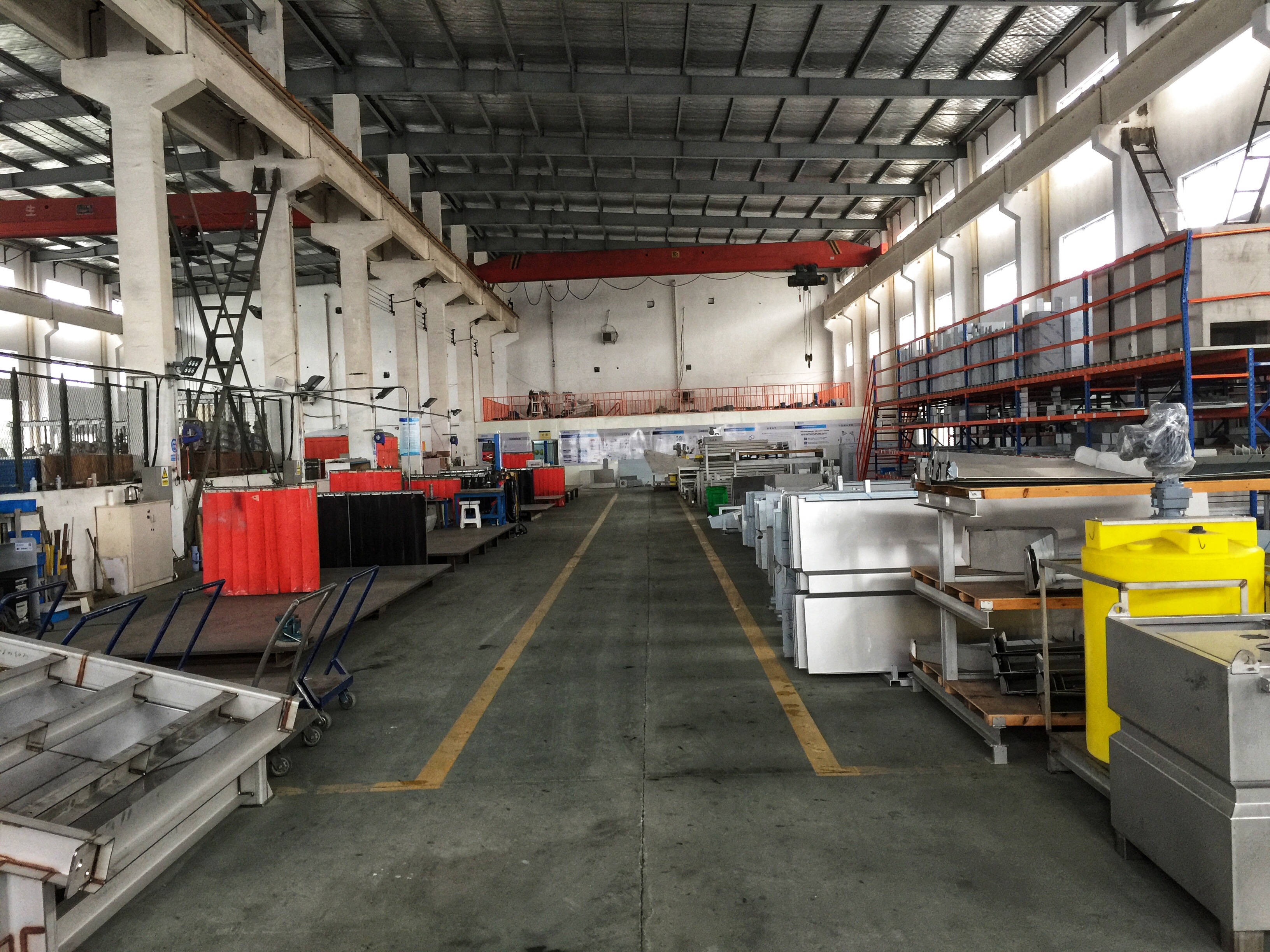
Welding workshop. Fabrication scope, material grade and surface protection belong in the written scope, not in a verbal clarification.
Why published capacity figures cannot be ranked directly
Capacity statements from different manufacturers are written on different bases, so a bare kilograms-per-hour figure cannot be subtracted from another bare kilograms-per-hour figure. HUBER's official Q-PRESS page, for instance, reports a screw press series with feed capacity up to 540 kg dry solids per hour across four sizes. Benenv publishes model-level figures on its own product pages. Neither statement supports a ranking against the other, because the feed sludge, inlet concentration, polymer dose, target cake dryness, exact model and test protocol are not aligned.
The verified comparison position is that no valid cross-vendor benchmark can be formed from published figures alone. Aligning them requires, at minimum, sludge type, inlet solids concentration, polymer dose, target cake dryness, the specific model, the test protocol and a continuous operating basis. A supplier that cannot state these conditions has given a number, not a performance commitment.
Capacity is therefore a term to be converted, not a term to be compared. Ask each supplier to restate its capacity on your sludge basis, and treat any figure that arrives without conditions as unverified for comparison purposes.
The six comparison terms that make offers comparable
A like-for-like comparison can be built on six terms. Each one should appear in the same format in every offer, so that differences are visible rather than buried in annexes.
| Comparison term | What to require in writing | Why it changes comparability |
|---|---|---|
| Scope of supply | Itemised include and exclude list: press, feed pump, PAM dosing, PLC cabinet, cake conveyor, piping, tanks, installation, commissioning, training | A price gap often sits in auxiliary equipment rather than in the press |
| Sludge basis and performance statement | Feed solids range, sludge type, polymer dose and type, target cake dryness, solids capture, throughput, model, test duration | Capacity figures on different bases cannot be compared or subtracted |
| Materials and wear parts | Wetted material grade with certificates, screw shaft and moving ring material, corrosion option, recommended spare set | Material grade drives both acceptance inspection and long-term maintenance cost |
| Controls and automation | PLC scope, alarm list, duty and standby logic, plant interface, remote support arrangement | An automatic operation claim means little without a described control scope |
| Documentation and compliance evidence | Drawings, P&ID, layout, O&M manual, spare parts list, certificate copies with number, issuer, scope and validity | A certificate name is not a certificate scope, and a drawing set is part of the deliverable |
| Commercial terms | Incoterm and named place, lead time trigger, payment schedule, warranty scope and start event, spares lead time, service response | The same headline price can carry different total cost and different risk |
Step-by-step: building a like-for-like comparison
The sequence below keeps the comparison honest, because each step removes one source of incomparability before the next is attempted.
Step 1: define the sludge basis before requesting prices
Record the sludge type (municipal, industrial, DAF, food processing or other), the inlet solids range including seasonal variation, oil and grease content, peak and average flow, and operating hours per day. Without this basis, suppliers will size to different assumptions and the resulting prices will describe different machines.
Step 2: issue one RFQ template with a fixed scope boundary
Send the same template to every supplier, with an explicit include and exclude table for feed pump, polymer dosing, control cabinet, cake conveying, piping, installation and commissioning. Require each supplier to mark every line as included, excluded or optional. This single document removes most of the ambiguity that makes offers look cheaper than they are.
Step 3: require a performance statement instead of a capacity number
Ask for throughput, cake dry solids, solids capture and polymer consumption stated against your sludge basis, together with the model offered and the conditions under which those figures apply. Where a supplier can only quote a nominal capacity, record it as unverified and treat the comparable part of the offer as incomplete.
Step 4: normalise commercial terms to one currency, one Incoterm and one start date
Convert every offer to a single currency and a named Incoterm with a named place, then define when lead time starts: on order, on deposit, on drawing approval, or on receipt of an import permit. These four details routinely shift delivery by weeks without any change in price.
Step 5: write acceptance criteria and remedies into the order
Acceptance criteria belong in the purchase order, not in a separate goodwill letter. Each criterion needs a measurement method, a sampling point, a responsible party and a consequence if it is missed: retest, parameter adjustment, polymer tuning, component replacement or partial payment retention.
Step 6: fix the handover package and the spares list
List the handover documents and the recommended spare parts in the order annex: O&M manual, as-built drawings, spare parts list with part numbers, material certificates, test records and training sign-off. Specify the wear parts to be held in stock and the lead time for restocking them, because spare parts availability affects uptime long after commissioning.
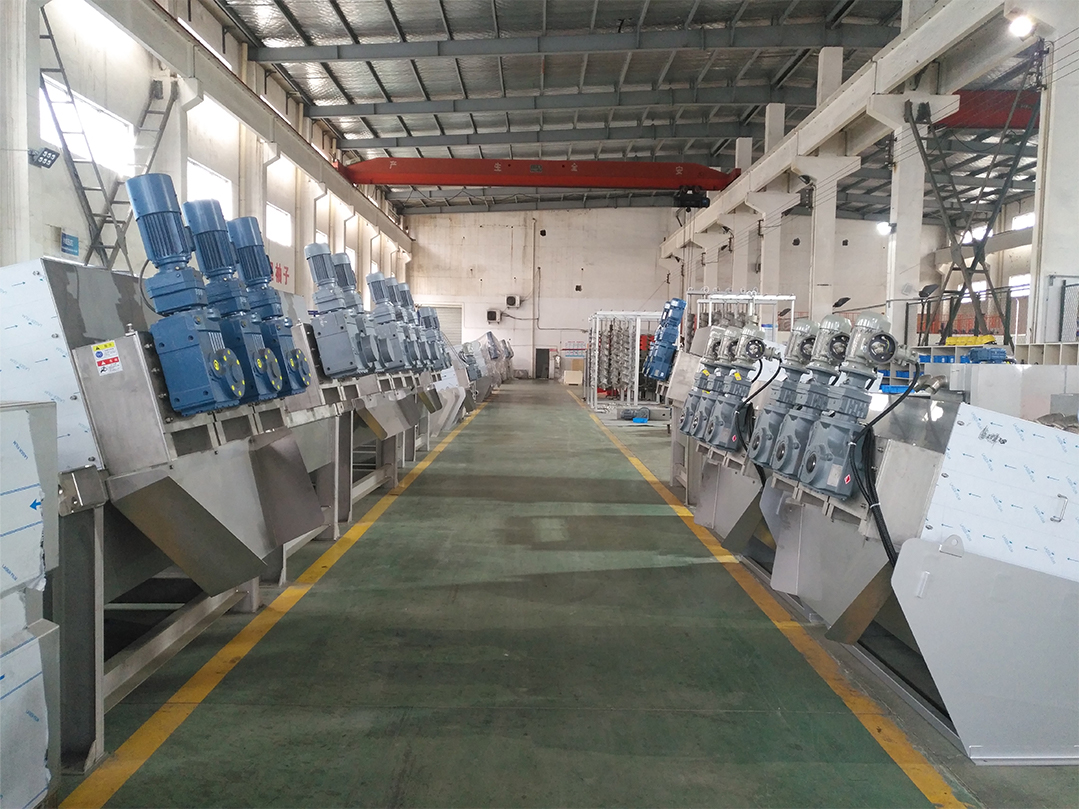
Assembly workshop. Pre-dispatch inspection records and as-built drawings form part of the acceptance package.
Acceptance criteria you can actually test at commissioning
Acceptance criteria should be split into three groups: mechanical and electrical completion, performance verification on site, and documentation handover. Mixing them into one vague clause is what allows a dispute to continue after start-up.
- Mechanical completion: leak check on seals, joints and wash-water lines; drive alignment and rotation check; guarding; measured noise at agreed points; confirmation of corrosion protection and material grade against certificates. A sealed design, corrosion-resistant materials and low-noise operation are the design features to verify here, since leakage, noise and corrosion are among the recurring risk items in sludge dewatering installations.
- Control verification: PLC logic test, alarm list walk-through, automatic run under stable conditions, and confirmation of the remote support route. Unstable operating parameters are usually a control and adjustment issue rather than a hardware failure, so the acceptance test should show that automatic control and real-time adjustment behave as described.
- Performance verification: cake dry solids, solids capture, polymer consumption per dry tonne and throughput, all measured against the sludge basis agreed in the order over an agreed continuous run period, with the sampling method and laboratory stated.
- Sludge variability: an explicit step for polymer dosing optimisation and operating parameter adjustment during commissioning, so the plant is tuned to the actual feed rather than to a bench assumption.
- Clogging and impurities: demonstration that the self-cleaning arrangement and continuous washing system handle the real feed, including any screenings or fibrous material expected on site.
- Wear baseline: a recorded measurement or inspection of screw shaft and moving rings at handover, so later wear can be judged against a documented starting point rather than an impression. Low-speed operation and wear-resistant materials reduce but do not eliminate this wear.
- Remedies: a retest window, the adjustment steps the supplier must take, and what happens if the criterion is still missed.
Two practical rules make these criteria enforceable. First, every criterion must name the party that measures and the party that witnesses. Second, the performance criteria must be written against the sludge basis in the order, not against a general catalogue statement, because acceptance testing on a different feed than the one quoted is the most common reason a dispute cannot be resolved on the facts.
Materials, wear parts and the spares clause
Material grade sits at the intersection of price, corrosion resistance and maintenance cost, so it should be compared as a specification, not as an adjective. Ask for the wetted material of the press body, screw shaft and moving rings, with mill certificates where the grade is claimed, and ask separately what corrosion option is proposed for your sludge chemistry. Anti-corrosion solutions such as SS304 or SS316 are commonly offered for aggressive streams; the grade proposed should be justified against your water chemistry rather than accepted by default.
Then treat wear parts as a commercial term. A recommended spare set of rings, a stated restocking lead time and a maintenance plan belong in the same comparison as the machine price, because two offers with the same press price and different spare parts positions have different lifecycle costs.
Commercial terms that change the total
Once scope and performance are normalised, the remaining differences are commercial, and they are easier to compare than they look. The items worth putting in one table are price validity, currency, payment milestones, warranty length and start event, warranty coverage of wear parts, spare parts pricing and lead time, service response commitment, commissioning scope, training and delay remedy.
The warranty start event is the most frequently overlooked term. A warranty that begins at shipment can expire before a plant has operated for a full sludge cycle, while a warranty that begins at acceptance places the risk where the supplier can control it. Similarly, a service response commitment without a defined response time and defined coverage area is a statement of intent rather than an obligation.
Three buyer situations and the terms that matter most
Municipal plant retrofit
Where an existing plant is replacing dewatering equipment inside a fixed footprint, the decisive terms are usually the layout envelope, the performance statement across seasonal sludge variation, and the service and spare parts commitment. Price differences here are frequently driven by civil works and piping scope rather than by the press.
Industrial or DAF sludge
Where the feed carries oil, grease or variable solids from a production process, the polymer dosing scope, the material and corrosion option, and the washing arrangement carry most of the risk. The acceptance criterion should be tied to the production sludge, not to a municipal reference.
Small or decentralised plant
Where operating staff are limited, automation scope, remote support and training become the deciding terms. A machine that requires frequent manual adjustment has a higher effective cost at a site without dedicated operators, even when its purchase price is lower.
Claims that need documentary proof
Several common statements in a quotation should be converted into documents before they influence a decision. Certificate names are the clearest example: a listing may show material grade, automatic operation and certificate names such as ISO 9000 or CE, but ISO 9000 is a quality management system standard rather than a specific product certification, and a CE mark requires a declaration and applicable directive scope. Ask for the certificate number, issuing body, scope and validity date, and check that the scope covers the product and market you are buying for.
Reference lists need the same treatment. A company-reported track record indicates scale, not fit: Benenv reports more than 4,500 project references in more than 60 countries, and a buyer should still ask for references in the same sludge type, capacity band and region, with permission to contact them. The same applies to published product ranges: where a supplier's own pages show different model counts or ranges, ask for the current catalogue and use that version in the comparison.
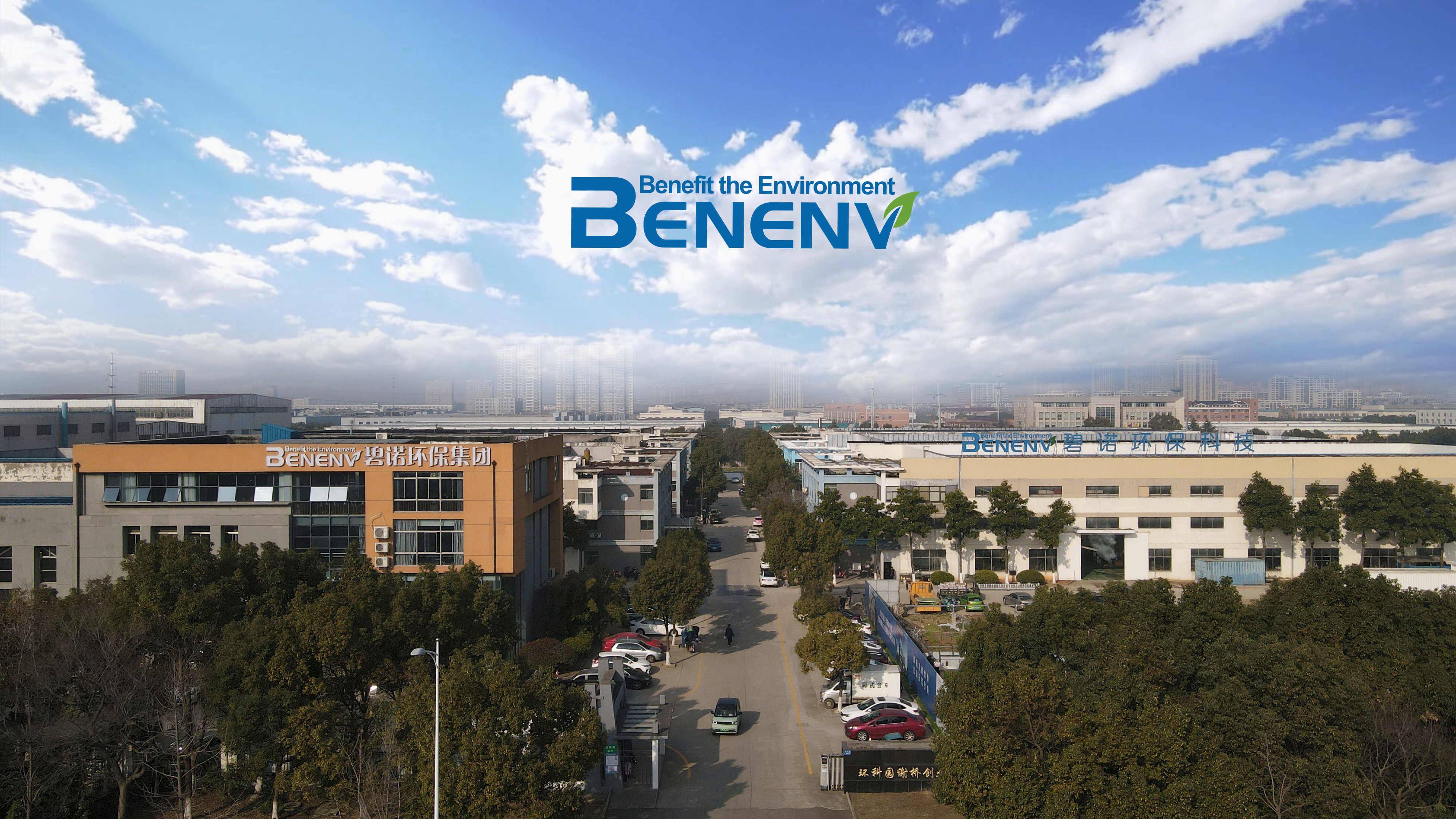
Benenv group facility. Supplier scale is background for prequalification; the quotation and its annexes carry the obligations.
FAQ
What compliance documents should accompany a screw press dewatering machine quotation?
Ask for certificate copies with number, issuing body, scope and validity, material certificates for the wetted parts where a grade is claimed, and evidence that the electrical and control equipment suits the destination market. Treat certificate names in a brochure or marketplace listing as claims until the documents are supplied, and write into the order which of those documents are contractual deliverables rather than optional attachments.
How do I compare capacity claims between two screw press sludge dewatering offers?
Do not compare a single kilograms-per-hour figure. Ask each supplier to restate throughput and cake dry solids on your sludge basis, with sludge type, inlet concentration, polymer dose and type, target dryness, model, test protocol and continuous operating basis stated. If one offer cannot be restated on that basis, it is not yet comparable, and the honest comparison excludes it rather than ranking it.
What belongs in a total cost comparison beyond the machine price?
Include polymer consumption, power, backwash or wash water, recommended spare rings and shaft parts, freight, insurance, duties, installation, commissioning, training, spare parts stock and the cost of downtime. Any published savings or efficiency comparison should be re-checked on your own sludge and operating pattern, because savings percentages from a different application do not transfer automatically.
Can we test our sludge before committing to an order?
Ask whether the supplier can run a bench or pilot test on a representative sample of your sludge, and require a written report stating feed solids, cake dry solids, polymer type and dose, model tested, run duration and sampling method. If testing is not possible before order, write the equivalent site performance test into the acceptance criteria and link payment or retention to it.
How should delivery and lead time be written into the purchase order?
State the lead time trigger, the Incoterm and named place, packing standard, partial shipment rules, the delay remedy and the spare parts lead time, then align the commissioning window and training dates with plant availability. If you share your sludge parameters, required scope boundary and target cake dryness with Benenv, the sales team can prepare a quotation in the same format for direct comparison; the product catalogue is available as a PDF for scope reference.
Conclusion
Comparing screw press sludge dewatering offers is a documentation exercise before it is a pricing exercise. The offer that looks cheapest is often the one with the narrowest scope, the vaguest performance statement and the shortest warranty, and those three differences cost more over a plant's operating life than the visible price gap.
The decision rule is simple: choose the offer whose scope, performance basis, acceptance test and remedy clause you can enforce, then compare prices on that normalised basis. A press is one line in a system, and the purchasing terms around it determine what the plant actually receives.
Next step
Benenv (JIANGSU BENENV ENVIRONMENTAL TECHNOLOGIES CO., LTD), founded in 2011, manufactures the MDS multi-disk screw press for sludge dewatering and solid-liquid separation at a 20,000 m² factory in Yixing, China. To build a like-for-like comparison, send your sludge type, inlet solids range, target cake dryness and required scope boundary, and request the quotation in the same six-term format used in this guide. Product catalogue (PDF): Benenv brochure. Contact: Roman, manager@benenv.com, tel +86 18921318788.
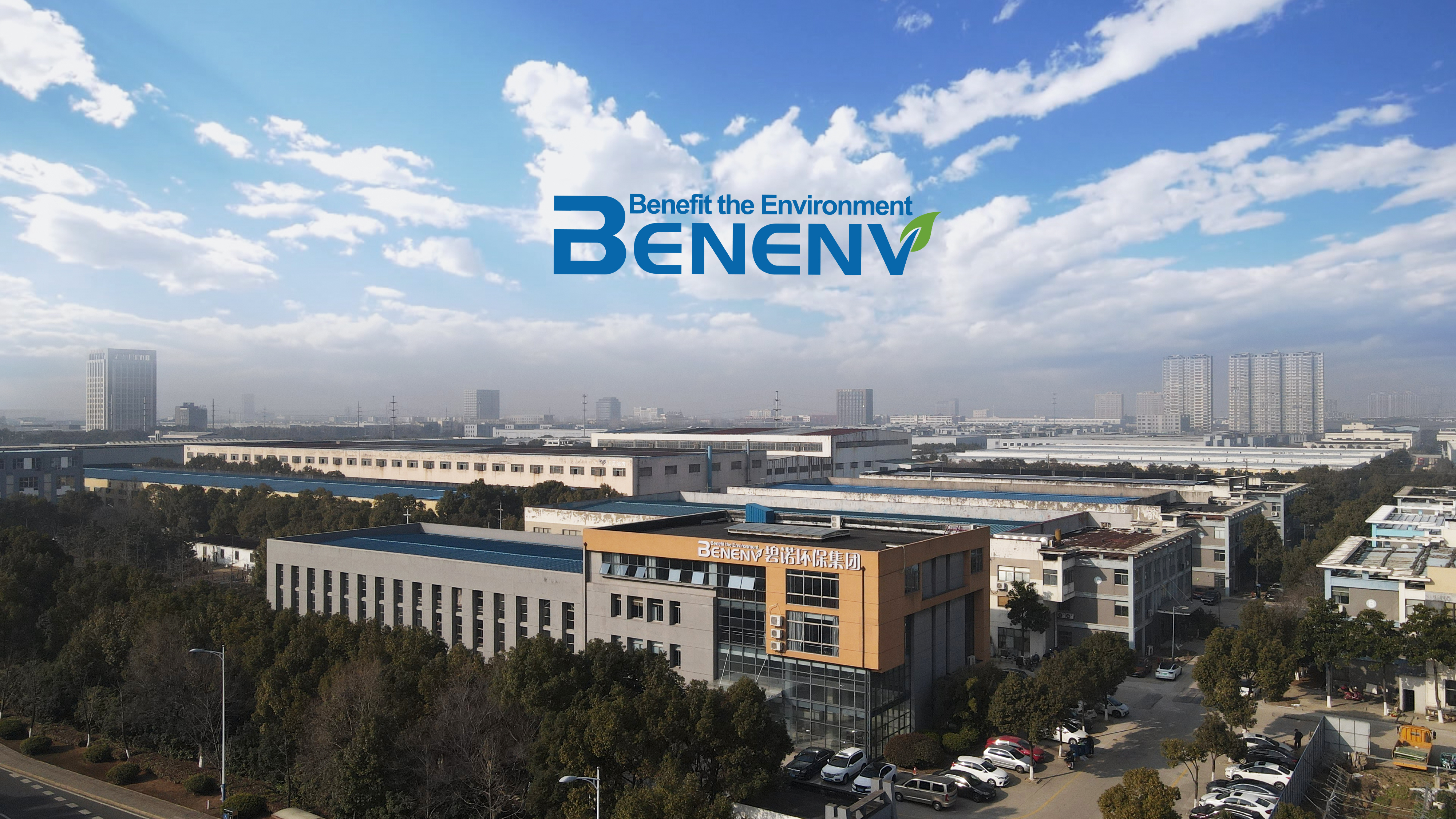
Benenv group. Quotation requests can be prepared against a fixed scope and sludge basis for direct comparison.
Have Questions or Need More Details?
Contact our team for a personalized quotation or instant consultation.
Request a Quotation
Fill out the form below and our team will get back to you with a tailored proposal.
WhatsApp Direct Chat
Prefer to chat in real-time? Message us on WhatsApp for instant assistance & quick answers.
- Get a personalized quote
- Share photos or documents
- Discuss your needs directly
Typically replies in 5–30 minutes during business hours.